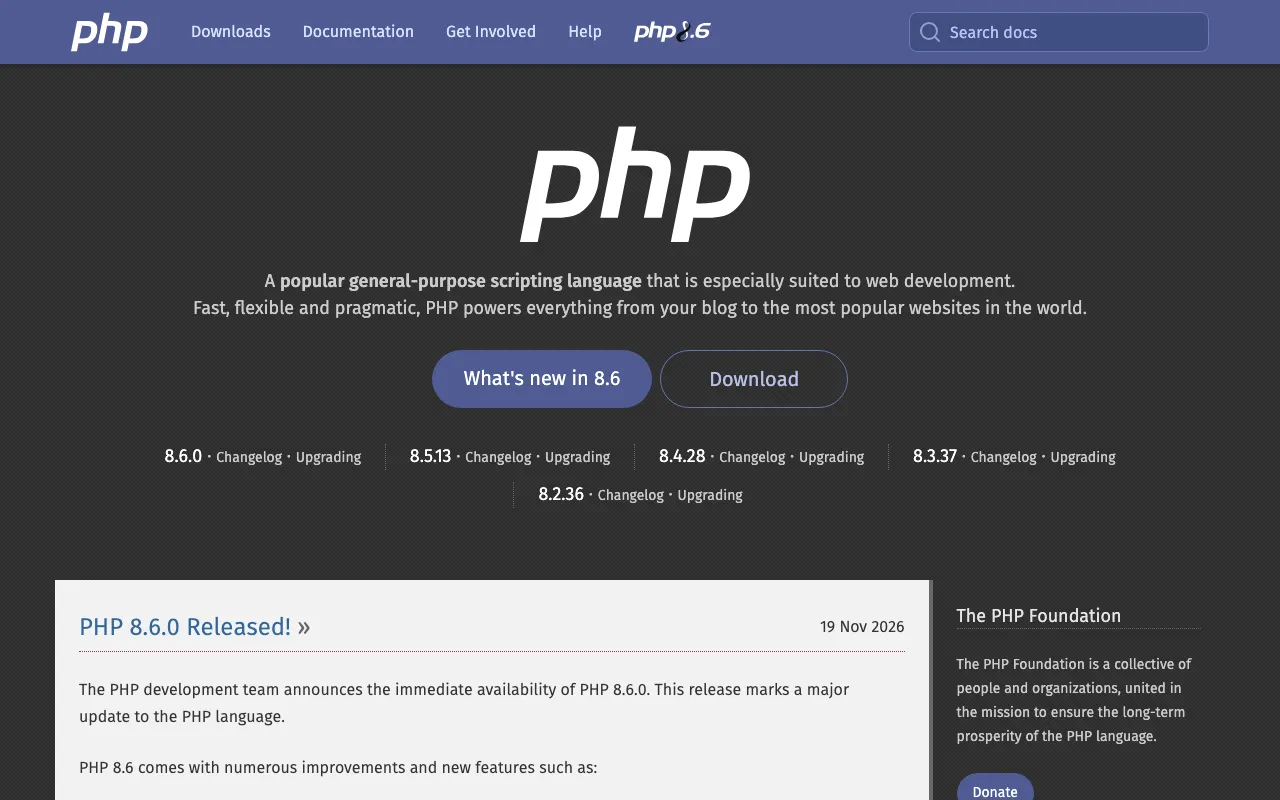
PHP is a widely used scripting language aimed at web development, distributed as interpreter binaries and buildable source. Prebuilt packages exist for common operating systems alongside optional extensions managed through separate installers.
Overview
PHP executes server-side and command-line scripts and suits building blogs, applications, and large public websites. The interpreter ships with bundled extensions and can be extended further through community extension libraries and installers.
Operators typically install prebuilt binaries on Windows or packages from their operating system vendor, or compile from source when they need a custom build or debugging configuration. Manuals are published on the official PHP documentation site, and releases receive ongoing security and feature updates across supported version branches.
The language runtime integrates with common web server deployments such as PHP-FPM, Apache modules, and other server interfaces mentioned in security advisories. Extension ecosystems add database drivers, formats, and specialized capabilities without changing the core interpreter API.
It is the core PHP interpreter source tree rather than a single end-user application. Teams choose PHP as the execution engine that powers their own web applications and services.
Key features
- Interpreter for web and CLI scripts
- Prebuilt Windows binaries
- Bundled core extensions
- Optional extensions via PIE and PECL
- Extensive manual and release notes
- Configurable debug and optimized builds
- Parallel test suite for quality checks
- RFC-driven language evolution process
Use cases
- Server-side web application backends
- Content sites and dynamic pages
- Command-line automation scripts
- Shared hosting compatible deployments
- Custom builds for specialized environments


 Ionic Enterprise