Redwood is a TypeScript-oriented framework that pairs a React frontend with an optional GraphQL API backed by Prisma. It ships integrated testing, logging, Storybook, and one-command auth or CSS setup.
Overview
RedwoodJS is a full-stack web framework meant to take applications from prototypes toward production without repeated technology choices. The default stack is a React UI talking to a custom GraphQL layer, with Prisma handling database access.
The framework bundles Jest for tests, Pino for logging, and Storybook for UI components. Authentication providers such as Auth0 and styling stacks such as Tailwind can be added through CLI generators. Deploy targets include serverless hosts like Netlify and Vercel and container-style providers like AWS or Render with little application change between them.
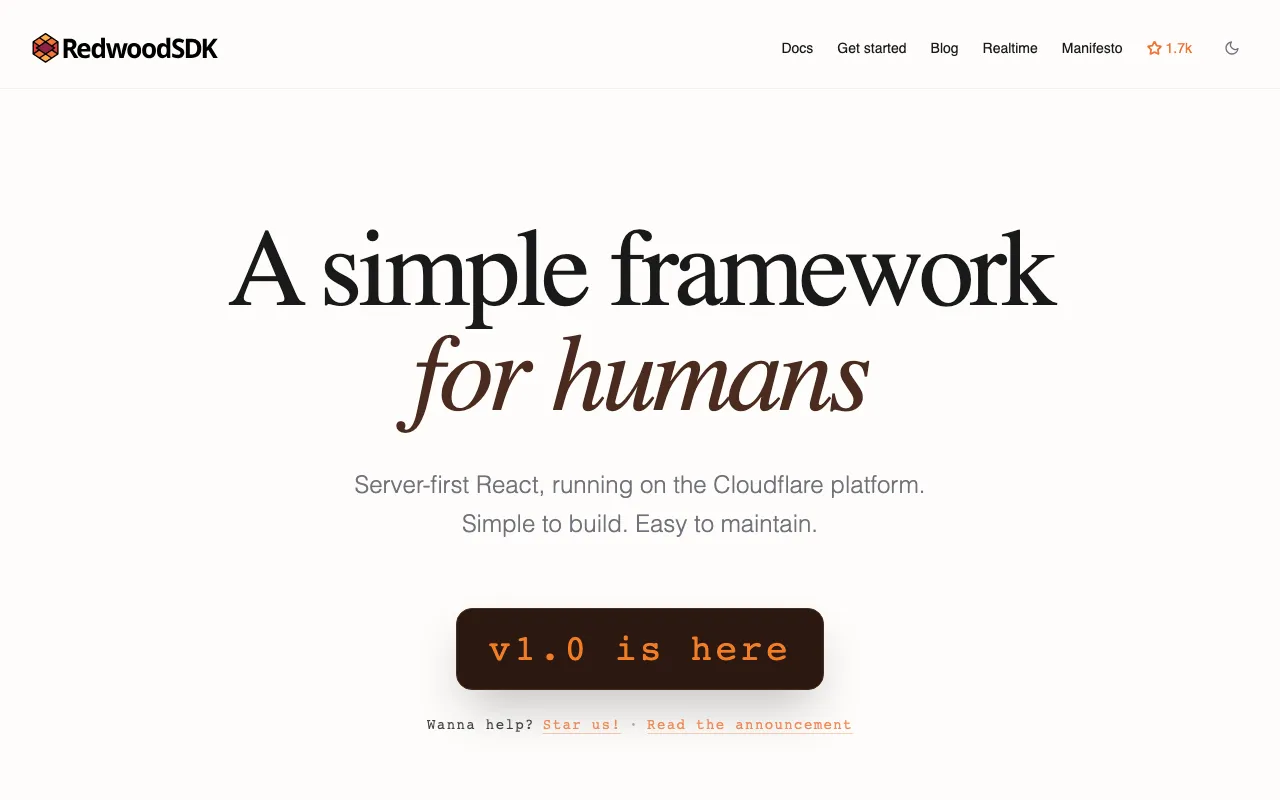
Newer direction in the materials centers on RedwoodSDK, a Vite-based path for server-first React on Cloudflare Workers. That line adds server rendering, React Server Components, server functions, streaming, realtime helpers, and integration with Cloudflare D1, R2, Queues, and related services while leaning on standard Request and Response APIs.
Redwood emphasizes declarative data loading, typed routes, and guidance on whether logic belongs on the server or client. A long-form tutorial and quick-start flow are offered for learning the framework end to end.
Key features
- React frontend with GraphQL API
- Prisma database integration
- Integrated Jest testing
- Storybook component catalog
- One-command auth generators
- Serverless and container deploy targets
- RedwoodSDK for Cloudflare Workers
- React Server Components support
Use cases
- Full-stack data-driven web startups
- Rapid React product prototypes
- GraphQL APIs with typed data layer
- Edge apps on Cloudflare via RedwoodSDK
- Teams wanting integrated toolchain defaults