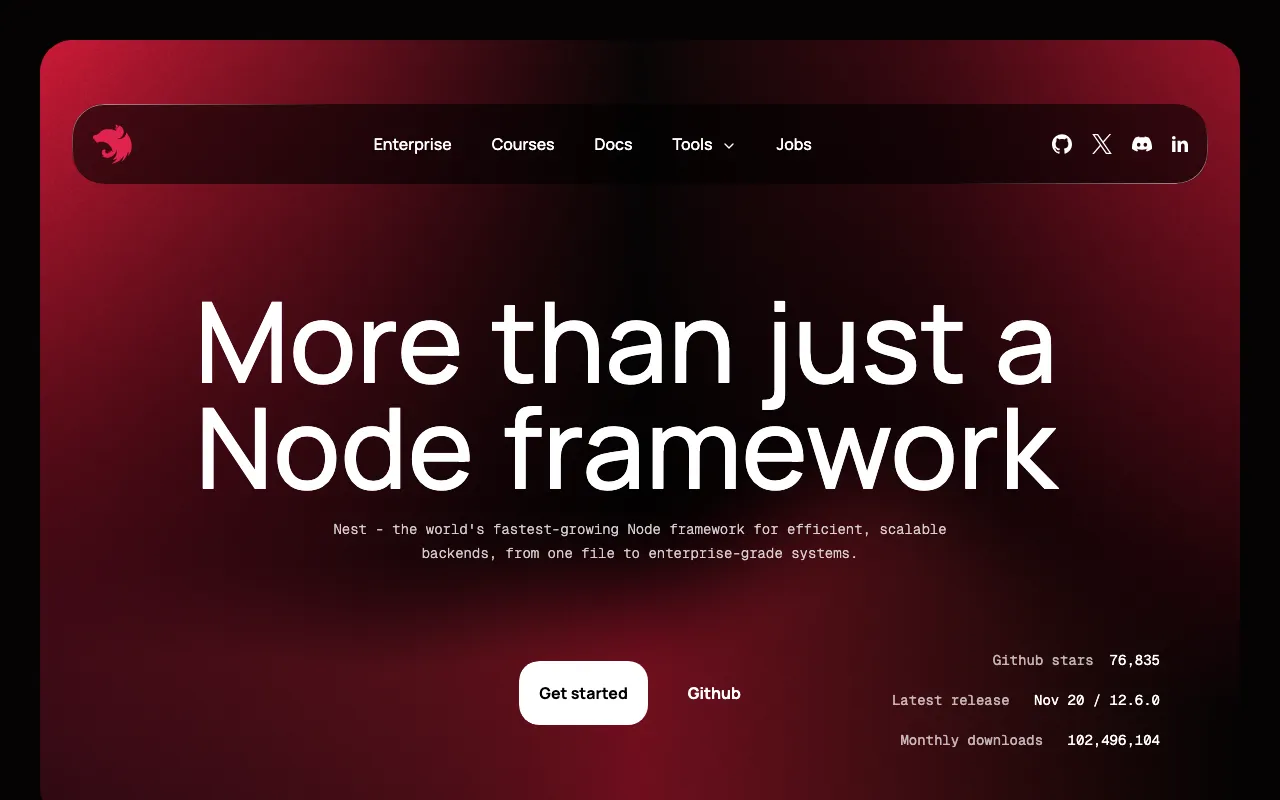
Nest organizes Node server apps with modules, dependency injection, and first-party packages for auth, data, queues, and observability.
Overview
Nest is a TypeScript framework for building server-side applications on Node.js, from a single-file API to multi-team backends. It structures code into modules with dependency injection and central hooks for validation, authentication, and error handling so projects stay consistent as they grow.
HTTP handling can run on Express, Fastify, or Node’s built-in HTTP adapter. Official packages cover databases through TypeORM, Drizzle, Mongoose, and Sequelize, plus authentication, authorization, mail, storage, i18n, BullMQ jobs, schedules, GraphQL, WebSockets, microservices, Swagger, caching, throttling, and health checks.
New projects are scaffolded with the Nest CLI, which emits decorator metadata needed for constructor injection and pipes such as ValidationPipe. Documentation is offered as markdown for coding agents, with optional agent skills that teach current APIs. Benchmarks cited in project materials compare throughput across adapters.
Optional commercial offerings include an observability SDK that auto-instruments Nest apps and enterprise support from the core team. The framework’s architecture draws inspiration from Angular-style modularity applied to backends.
Key features
- Modular dependency injection
- Express, Fastify, or node:http
- First-party auth and data packages
- Microservices and WebSocket support
- OpenAPI via Swagger integration
- CLI project generation
- Agent-oriented docs and skills
- Optional auto-instrumented observability
Use cases
- Enterprise Node APIs and services
- Gradual migration from Express
- Microservice backends with shared patterns
- Next.js server route extraction
- Teams wanting structured TypeScript servers