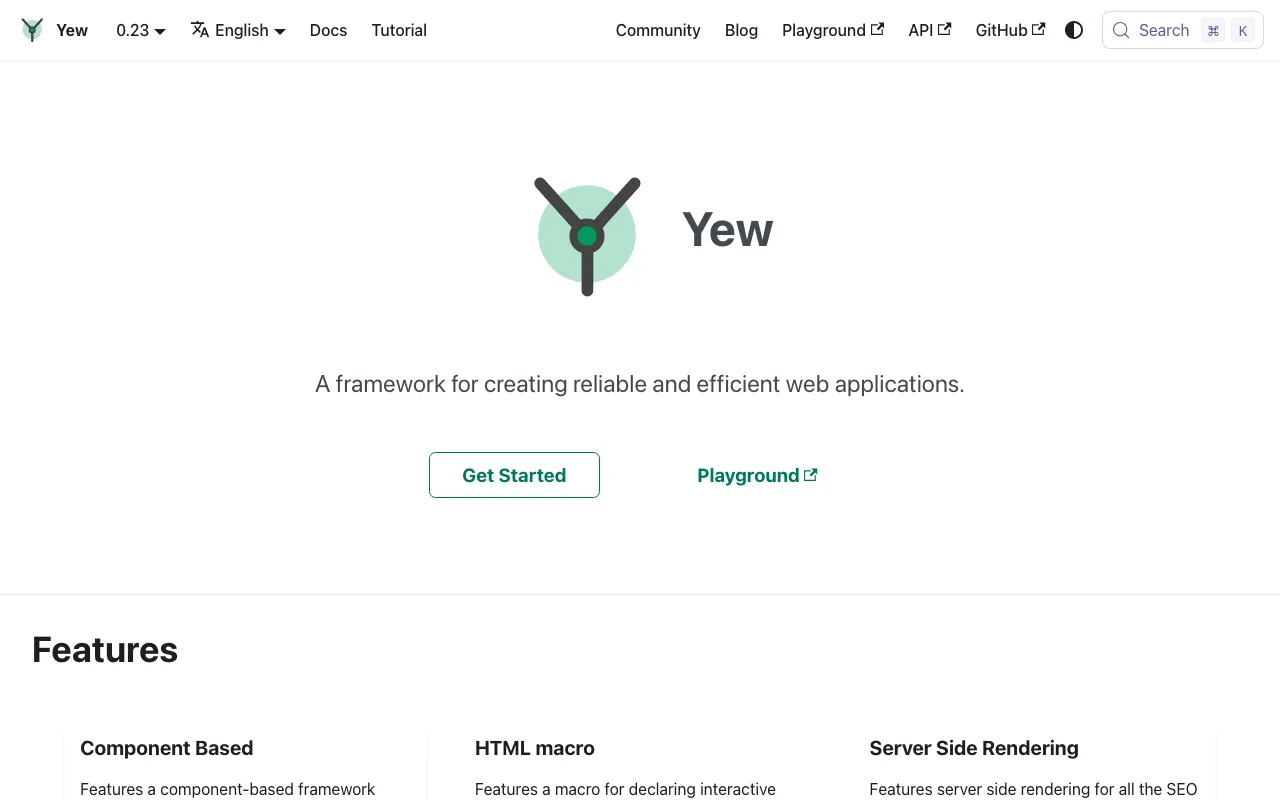
Yew is a Rust framework for building multithreaded front-end web applications that compile to WebAssembly, with a component model familiar to React users.
Overview
Yew targets interactive browser applications written in Rust and delivered as WebAssembly. It emphasizes component-based UIs, limiting direct DOM churn per render and supporting background work through web workers.
A macro lets you declare HTML with Rust expressions in a style comparable to JSX, and the framework documents parallels for developers coming from React or Elm. JavaScript interoperability allows using npm packages and embedding into existing JS codebases.
The project website also lists server-side rendering to combine SEO-friendly first paint with single-page-app behavior after load. Documentation is published in stable and rolling versions, with examples and community resources such as curated awesome lists.
Yew is community maintained with contribution guides and chat support; it is positioned as a modern option for reliable, efficient Wasm-powered web front ends.
Key features
- Rust to WebAssembly web apps
- Component-based UI model
- HTML macro similar to JSX
- Web worker offload support
- JavaScript and npm interoperability
- Server-side rendering support
- Multithreaded front-end design
- Stable and latest documentation
Use cases
- Wasm-powered single-page apps
- Rust full-stack web front ends
- Interactive dashboards in the browser
- Gradual integration with JavaScript apps




 Ionic Enterprise


