Reflex lets developers build full-stack web apps entirely in Python, with frontend and backend in one language. The reflex CLI runs a dev server with fast refresh as you edit.
Overview
Reflex is a Python library for building full-stack web applications without writing JavaScript for the UI. Developers define interfaces, state, and server logic in Python; apps can range from simple starters to more complex dashboards and data tools.
Installation uses standard Python packaging workflows, and the reflex command starts a local development server so changes appear on save. Documentation and examples walk through defining UI components, state classes, and event handlers, including sample apps such as image generation interfaces that call models from handlers.
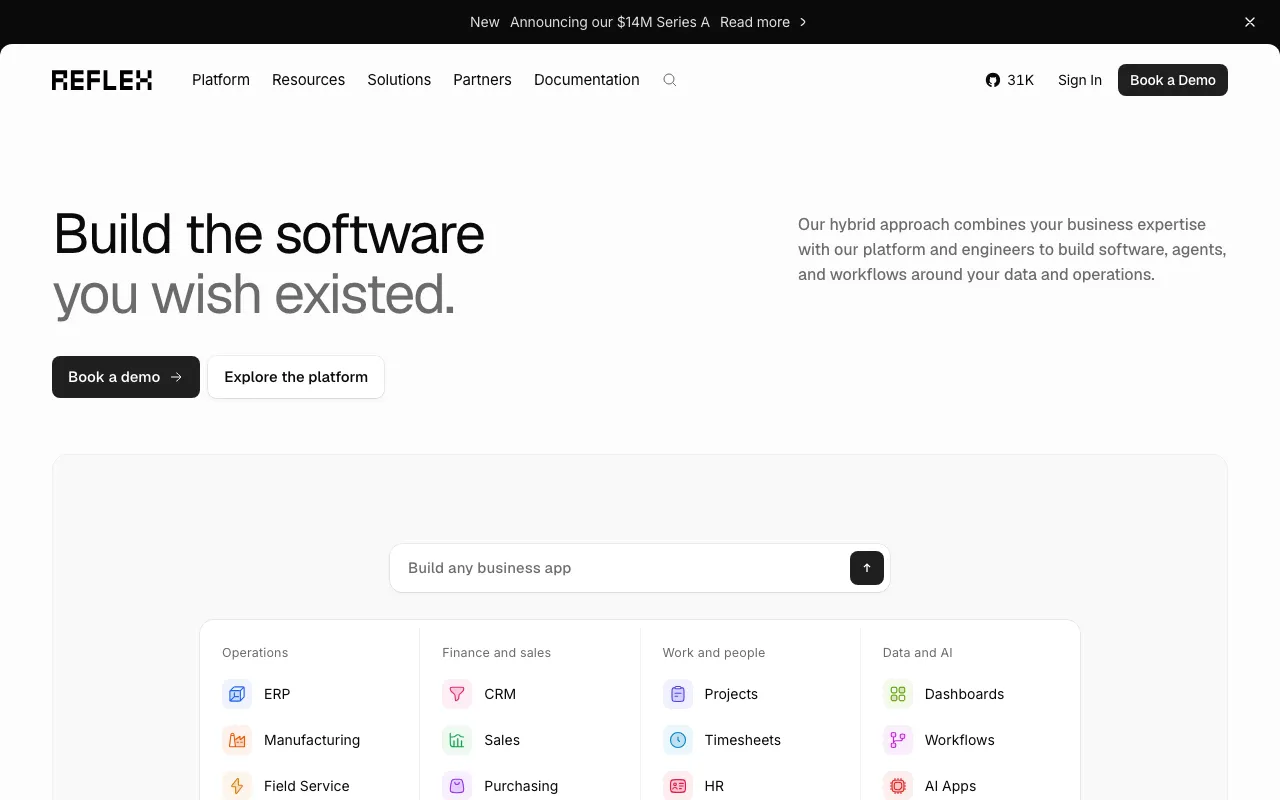
Reflex also serves as a broader platform for custom business software, with data connections, workflows, AI builder tooling, agents, and deployment options on Reflex Cloud or customer infrastructure. Teams use it for internal dashboards, operational apps, and bespoke tools deployed on organization-owned environments.
Teams can stay in Python end to end, connect existing data and systems, map business rules into workflows, and ship prototypes through production on customer-controlled hosting where required.
Key features
- Frontend and backend written in Python
- CLI dev server with fast refresh
- State classes and event handlers
- AI Builder for generating apps
- Agent Toolkit for MCP and Skills
- Deploy to Reflex Cloud or own infra
- Data and workflow integration layer
- App management for deployed Reflex apps
Use cases
- Python-only internal dashboards
- Rapid prototyping of business web apps
- Data visualization and analysis UIs
- Custom operational tools on private cloud
- Image or model-driven interactive apps




 Ionic Enterprise


