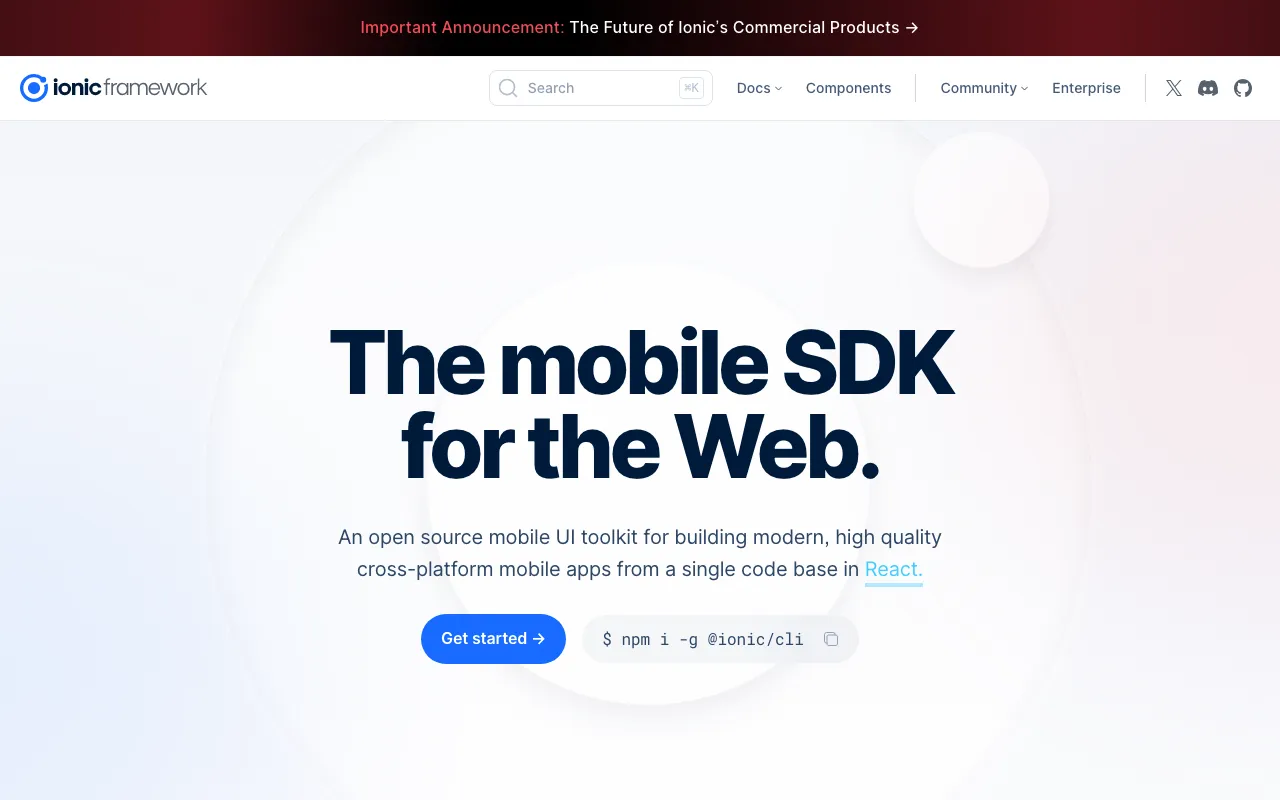
Ionic is a UI toolkit for building iOS, Android, and progressive web apps from one web codebase. It ships Web Components and plugs into Angular, React, or Vue.
Overview
Ionic is an app development toolkit for cross-platform native-quality and progressive web experiences built with HTML, CSS, and JavaScript. It is implemented with Web Components, which the project cites for performance and framework interoperability.
The component set covers mobile patterns such as action sheets, alerts, modals, toggles, inputs, and navigation controls, with platform-styled iOS and Android modes and light or dark themes. Teams can start new apps from documentation-driven workflows and pair the UI layer with Capacitor to reach device APIs like camera, filesystem, and share sheets on installed binaries.
Tooling includes the Ionic CLI for create, build, test, and deploy flows, editor extensions, and on-device hot refresh during development. The same UI code can target browsers as a PWA or ship through app stores when wrapped with Capacitor bridges and plugins, including custom native plugins in Swift, Java, or JavaScript.
Optional Ionic Appflow services address cloud builds and live updates for teams that want hosted pipelines, while the core framework remains a library consumed in front-end projects.
Key features
- Web Components UI library
- Angular, React, and Vue support
- iOS and Android platform modes
- Light and dark themes
- Capacitor native bridge
- Ionic CLI tooling
- PWA and store deployment path
- Touch-optimized controls
Use cases
- Hybrid mobile apps from web skills
- Progressive web applications
- Shared UI across iOS and Android
- Capacitor-based native plugins




 Ionic Enterprise


