
TensorFlow
End-to-end machine learning platform and tooling ecosystem
TensorFlow is a machine learning platform with Python and C++ APIs, optional GPU packages, and companion libraries for data, training, deployment, and visualization.

Agentic framework for autonomous scientific research workflows
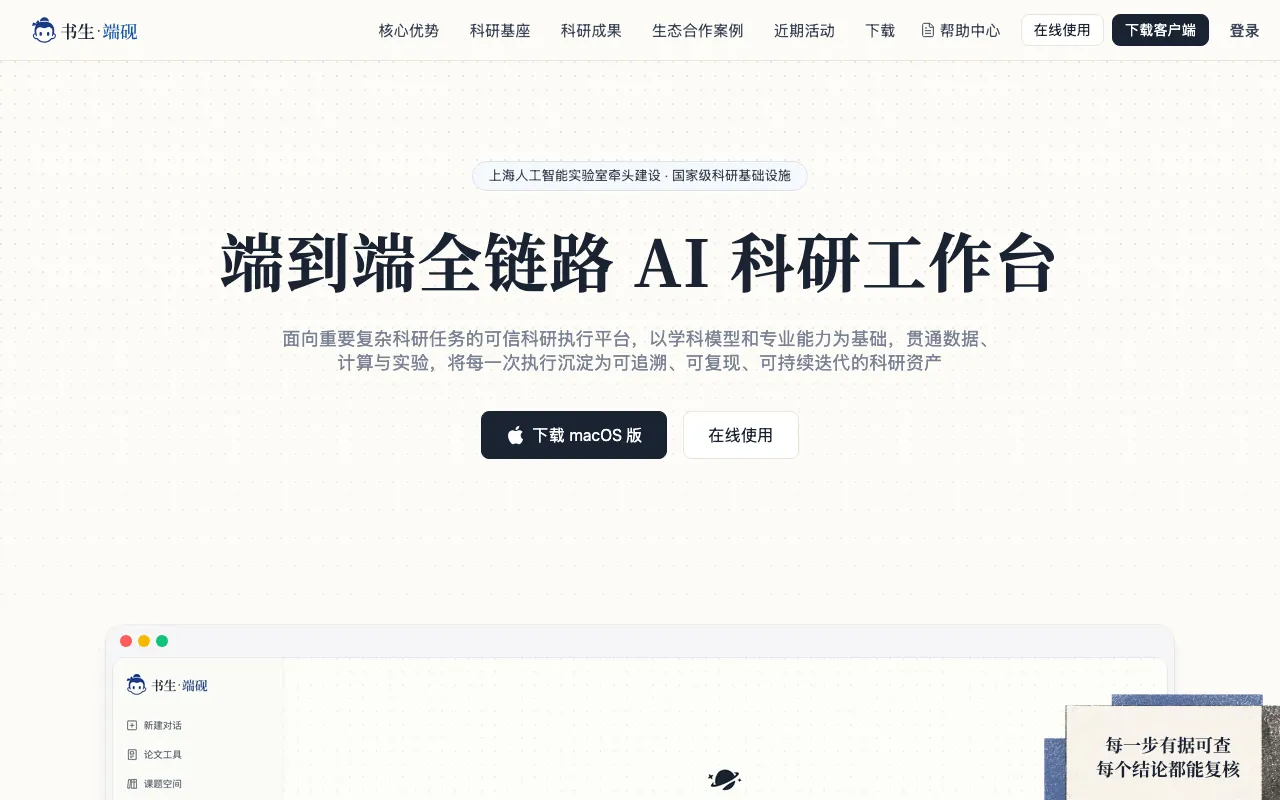
InternAgent is an open agentic framework for long-horizon scientific discovery, from hypothesis generation through experiments and paper reproduction. It supports discovery loops, QA via deep research, and persistent experiment memory.
InternAgent coordinates automated research workflows across algorithm discovery tasks and scientific paper reproduction benchmarks. A unified launcher can run full discovery experiments that generate ideas and execute code, skip idea generation when reusing saved ideas, answer research questions through a deep-research pipeline, or reproduce published findings from supplied papers and data.
Task folders describe prompts, baseline code, and launch scripts for individual discovery problems. Separate scientific-task modes target reproducing published results. Configuration lives in YAML under a config directory, with API keys supplied through environment files; OpenRouter gateway usage is documented for model access.
The memory module records outcomes across sessions so later runs can avoid failed directions and build on successes. Deep Research splits questions into subtasks, queries academic and web sources in parallel, and synthesizes structured answers or reports. Results and logs are written to configured output directories, with example shell scripts for common entry points.
InternAgent is software you run locally with your own model API keys rather than a hosted product. AutoDebug is offered as a small first task to validate installation without large downloads.
End-to-end machine learning platform and tooling ecosystem
TensorFlow is a machine learning platform with Python and C++ APIs, optional GPU packages, and companion libraries for data, training, deployment, and visualization.

Shared model definitions for multimodal ML workloads
Transformers is a Python library that defines pretrained text, vision, audio, and multimodal models once in PyTorch for shared inference and training across the ecosystem.

Open-source RAG engine and agent context platform
RAGFlow ingests heterogeneous documents, builds retrievable knowledge, and supports agent workflows with citations. It can run on your own hardware with Docker or a from-source server stack.

Local LLM context compression library and proxy
Headroom shrinks tool outputs, logs, JSON, and chat history before LLM calls to cut input tokens while preserving retrievable originals. It offers a Python library, proxy, MCP tools, and agent wrappers.

Local desktop workspace to run and fine-tune AI models
Unsloth is a desktop application to chat with, fine-tune, and serve LLMs, diffusion, audio, and embedding models on your own hardware with optional agent integrations.

TensorFlow reference models and modeling utilities collection
The TensorFlow Model Garden hosts implementations of models and modeling solutions for TensorFlow, installable via pip as tf-models-official.