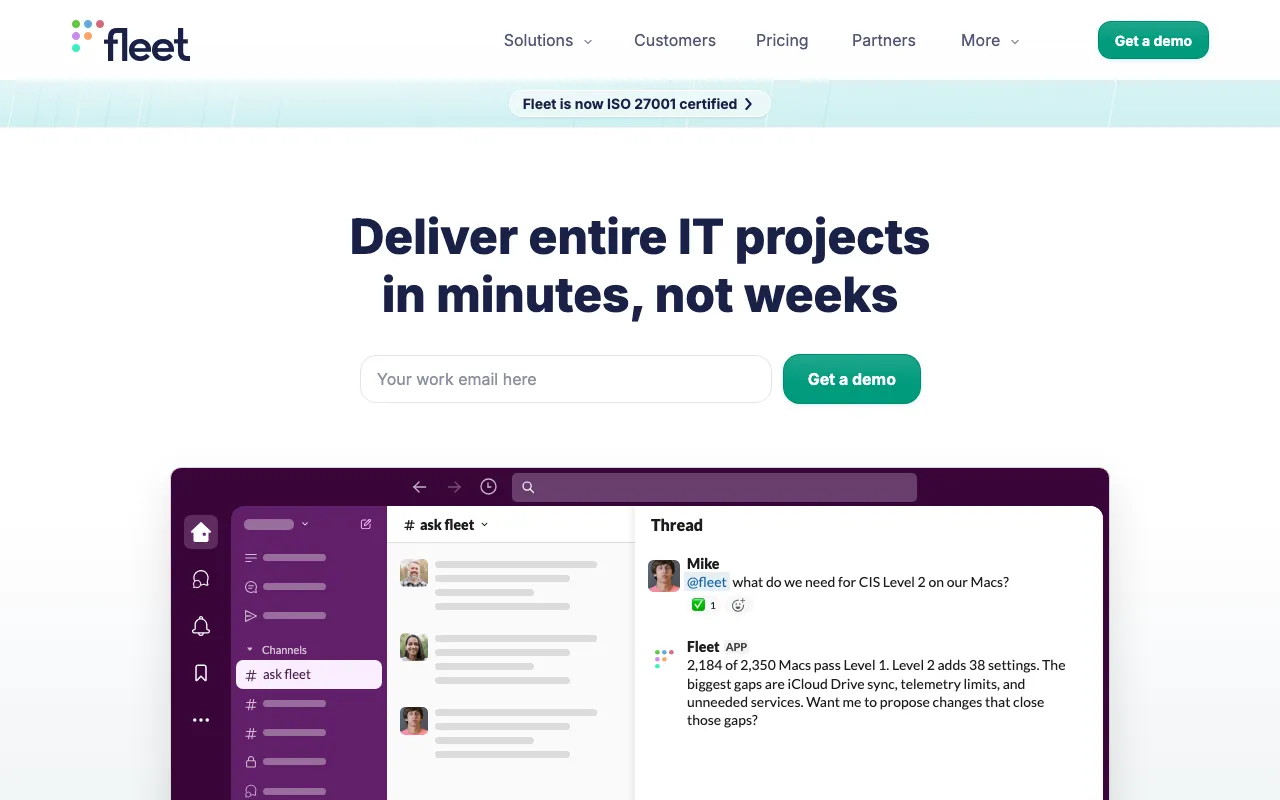
Fleet is an open platform for IT and security teams to manage, patch, deploy software, and inventory computers and mobile devices. It supports GitOps, APIs, webhooks, and a web UI.
Overview
Fleet gives organizations one control plane to secure and maintain fleets of laptops, phones, servers, kiosks, and related devices across Linux, macOS, Windows, ChromeOS, iOS, Android, and other form factors. It combines mobile device management, patching, software deployment, scripting, diagnostics, and visibility into hardware and software inventory.
The platform works at the operating-system layer with agents and integrates identity, endpoint security, ticketing, observability, and automation tools. Visibility features include CIS-oriented benchmarks on macOS and Windows, fast device reporting, and transparency about collected telemetry. Fleet is modular so teams can use MDM without full security telemetry, or the reverse.
Operations can be driven through GitOps and YAML, a GUI, REST APIs, webhooks, or the fleetctl CLI. A free tier remains available, with optional commercial licensing for paid capabilities. The agent stack builds on osquery and related open components.
Key features
- Cross-OS MDM and patching
- Software deployment and scripts
- Device inventory and diagnostics
- GitOps and REST API control
- CIS benchmark reporting
- Identity and SaaS integrations
- Modular feature toggles
- fleetctl command-line tool
Use cases
- Enterprise laptop fleets
- Apple and Windows management
- Linux server visibility
- Compliance-oriented device reporting