
XiaoZhi ESP32
ESP32 voice chatbot firmware using MCP
XiaoZhi AI is voice-interaction firmware for ESP32 boards. It uses large models such as Qwen or DeepSeek and controls devices through the MCP protocol.
Realtime voice AI stack for ESP32 toys and devices
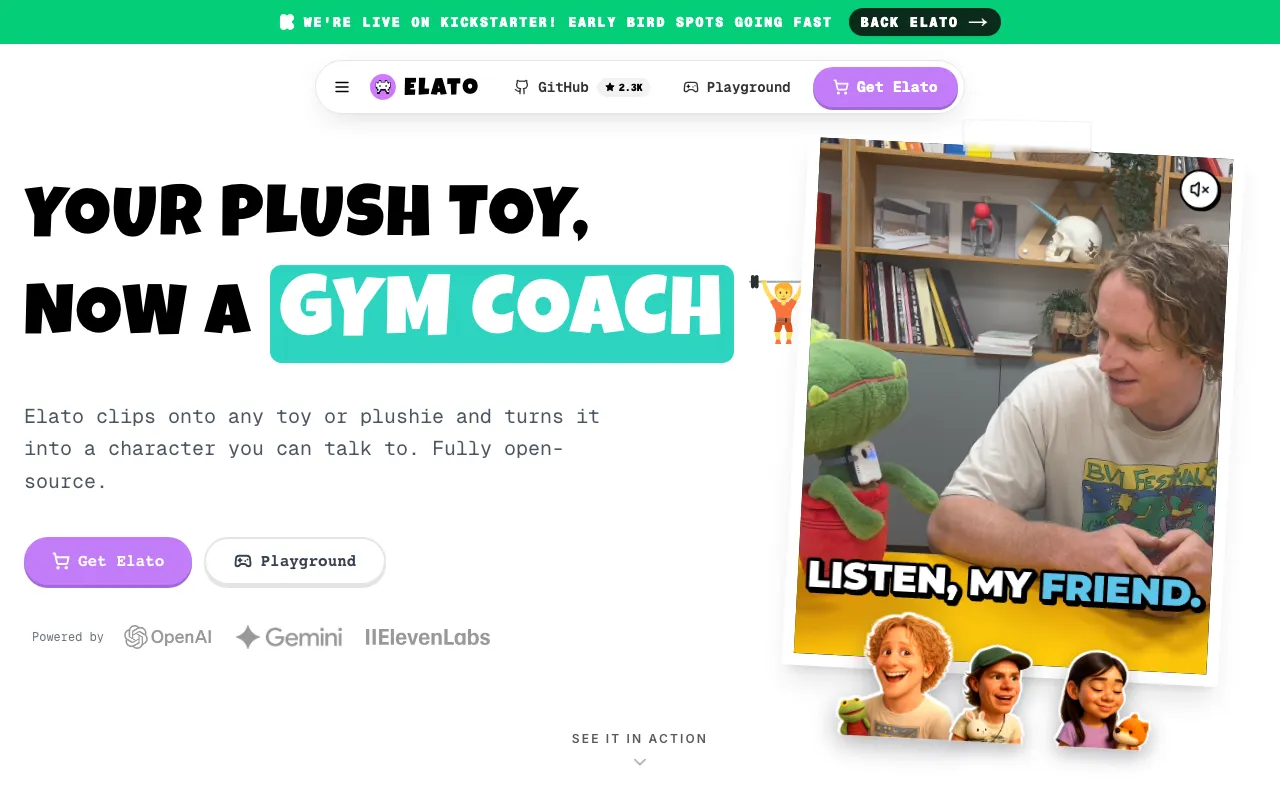
ElatoAI connects ESP32 hardware to many STT, LLM, and TTS providers over secure WebSockets for speech-to-speech agents and custom characters.
ElatoAI is an open-source stack for realtime voice conversations on ESP32-based hardware such as clip-on AI toys and desk companions. Audio moves through encrypted WebSockets to edge functions that call speech and language model APIs, with Opus compression and server-side voice-activity turn detection.
The system has three parts: a Next.js web app to create agents and manage devices, edge servers on Deno Edge or Cloudflare Workers (or a self-hosted FastAPI server with Pipecat) that broker websockets and model calls, and ESP32 firmware built with PlatformIO or Arduino. Users can pick from many pipeline options including realtime APIs and classic STT-LLM-TTS chains.
The web client supports WebRTC conversations, device registration, volume and pitch control, conversation history stored in Supabase, OTA firmware updates, Wi-Fi setup via captive portal, and OAuth for end users. Firmware features include touch or button control, factory reset, tool calling to edge functions, and operation without PSRAM.
You can deploy globally on managed edge hosts or run components on your own machine with your API keys and local models, as described in project docs and the marketing site.
ESP32 voice chatbot firmware using MCP
XiaoZhi AI is voice-interaction firmware for ESP32 boards. It uses large models such as Qwen or DeepSeek and controls devices through the MCP protocol.

On-device wake word and keyword spotting engine
Porcupine is Picovoice’s wake word engine for always-listening voice apps. It spots fixed spoken commands on the device using compact neural models, without sending audio to the cloud.
Desk robot showing AI coding agent activity
Tiny Engineer is a small open-source desk robot that moves, changes its face, and rings to mirror your AI coding agent. It connects over Wi-Fi or USB to tools like Claude Code and Cursor

Open-source personal AI assistant running on your devices and chat apps
Open-source AI assistant that runs on your own computer and answers in chat apps such as WhatsApp, Telegram, Slack and Discord. State, memory and credentials stay on your hardware.

Open-source plugin-based agent harness from DeepSeek
DeepSeek Harness is an open-source agent harness built on an everything-is-a-plugin architecture powered by Cordis. It offers a web UI, desktop app, and extensible plugins for daily work, coding, and automation.

Self-improving open-source AI agent with memory, skills and messaging gateway
Open-source AI agent from Nous Research that keeps persistent memory, creates skills from experience, and runs from a terminal, desktop app or messaging platforms with any model provider.
 ChatGPT
 Anthropic Claude