
REA
MCP and CLI reverse-engineering toolkit for agents
REA connects coding agents and terminals to local analysis tools for binaries, Electron apps, websites, .NET, and Android targets. Setup registers MCP access and investigation skills via npm.

Deprecated collision-resistant client-side identifier generator
cuid is no longer maintained. The project says: “Status: Deprecated due to security.” source Look at the maintained alternatives below before choosing it.
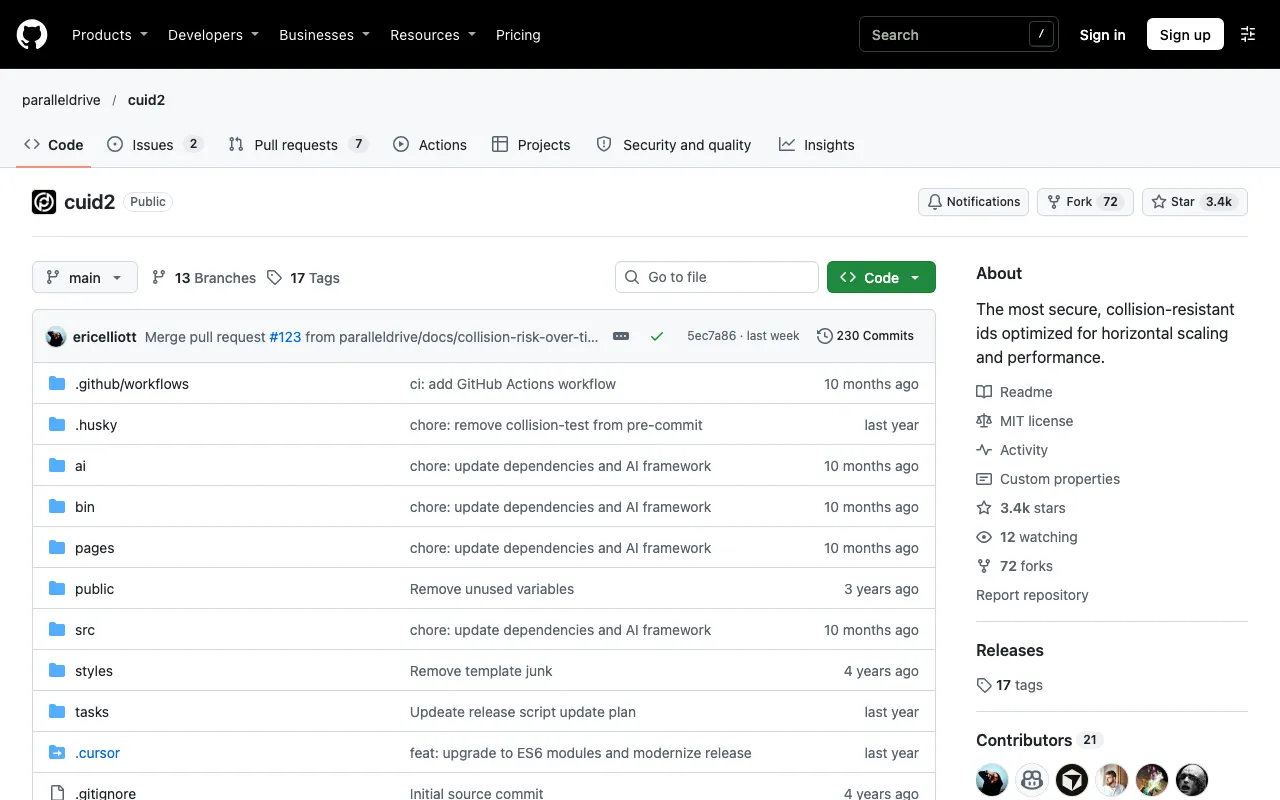
cuid generates short unique strings for databases and HTML IDs. The maintainers deprecate it in favor of Cuid2 because timestamps in IDs raise security concerns.
cuid is a JavaScript-oriented identifier scheme that returns compact random-looking strings safe for HTML element IDs and server-side unique keys. Each ID combines a leading marker, timestamp, counter, client fingerprint, and random material to reduce collision risk across processes and hosts.
The format is designed for horizontal scaling: multiple clients can create IDs without a central database sequence, and IDs from one machine tend to increase over time for index-friendly ordering. Implementations exist for Node, browsers, and several other languages through community ports.
The project documentation explains trade-offs versus UUIDs and warns that monotonic and timestamp-based IDs can leak ordering or timing. It also notes that cuids are not marketed as cryptographically secure secrets.
Repository status marks the original cuid specification as deprecated and directs new work to Cuid2, which addresses the stated security issues while keeping similar goals around collision resistance and offline generation.
MCP and CLI reverse-engineering toolkit for agents
REA connects coding agents and terminals to local analysis tools for binaries, Electron apps, websites, .NET, and Android targets. Setup registers MCP access and investigation skills via npm.
AI-guided terminal toolkit for authorized security testing
Hackingtool bundles many security utilities in one console with optional AI help to pick tools and commands. It targets Linux and macOS and is meant for authorized testing only.

AI-driven penetration testing for developers
Strix runs autonomous AI agents that probe applications like attackers, validate issues with proofs of concept, and integrate into CLI and CI workflows.
Android customization suite with root and modules
Magisk is open source software for tailoring Android 7.0 and newer devices. It provides root access, systemless module installs, boot image tools, and per-app code injection via Zygisk.

Autonomous AI penetration tester for web apps and APIs
Shannon analyzes web application source code, plans attack paths, and runs real exploits against staging targets. Only vulnerabilities confirmed with a working proof of concept appear in reports.

POSIX shell client for ACME SSL automation
acme.sh issues, renews, and installs SSL and TLS certificates via the ACME protocol using a single shell script with no Python dependency.