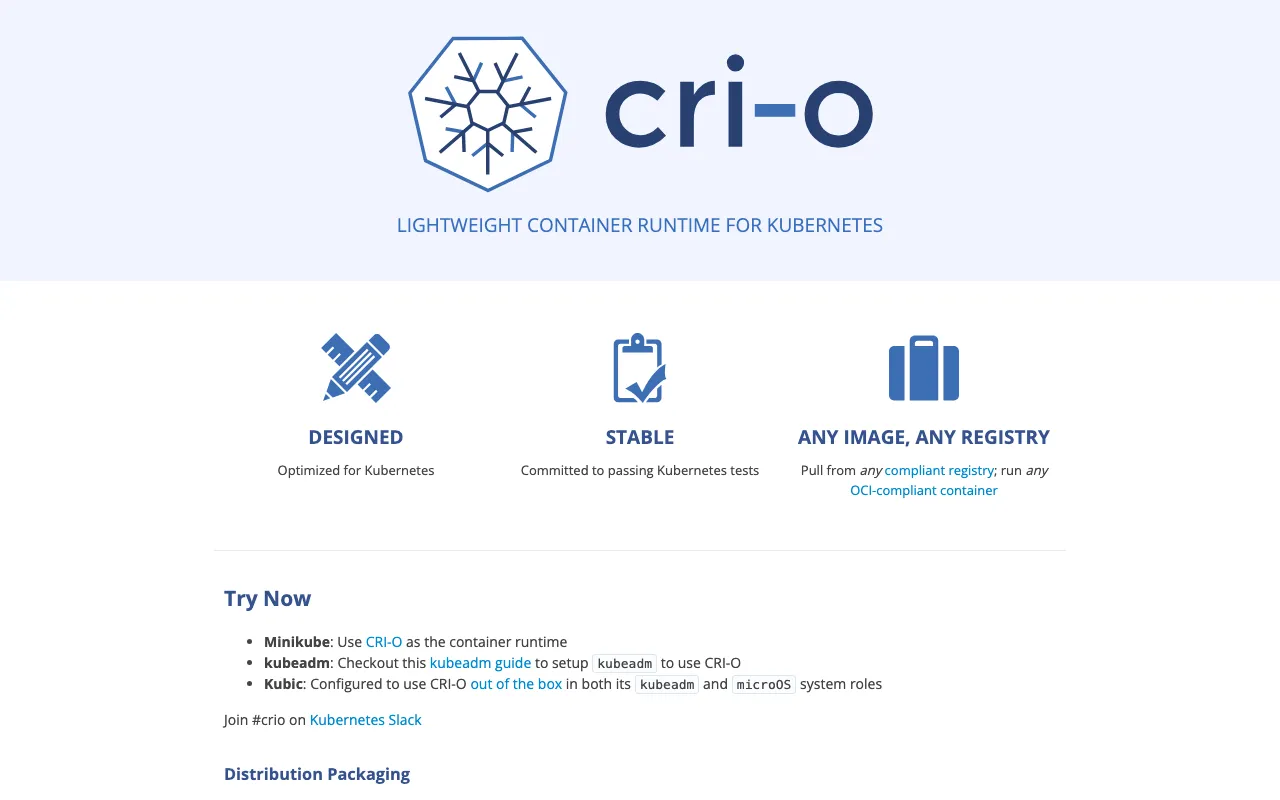
CRI-O implements the Kubernetes Container Runtime Interface using OCI-compliant runtimes. It lets the kubelet launch and manage standard container images on cluster nodes.
Overview
CRI-O bridges the kubelet and conformant OCI runtimes such as runc, focusing on image handling, container lifecycle, logging, monitoring, and resource isolation required by the CRI. It is not meant to build, sign, or push images, nor to serve as a general-purpose end-user CLI.
The runtime pulls images from registries, manages layers and storage, generates OCI runtime specifications, and starts containers. Pod networking uses CNI plugins; conmon handles logging and exit status per container. Storage drivers include overlay and others via containers/storage; images are fetched with containers/image.
CRI-O tracks Kubernetes release lines for minor versions and is packaged for common Linux distributions via RPM, DEB, or Fedora repositories, with guides for kubeadm, Minikube, and related setups. An optional HTTP status API exposes configuration and runtime information beyond the gRPC CRI endpoint.
The project positions itself as a focused runtime for Kubernetes rather than a full standalone container engine, with support for multiple image formats and verification options when pulling images.
Key features
- Kubernetes CRI implementation
- OCI runtime integration
- Registry image pull support
- CNI pod networking
- conmon container monitoring
- Multiple storage drivers
- Optional HTTP status API
- OCI runtime hooks
Use cases
- Kubernetes node runtimes
- kubeadm cluster setups
- Minikube container backend
- OCI-compliant pod execution
- Replacing Docker as kubelet runtime