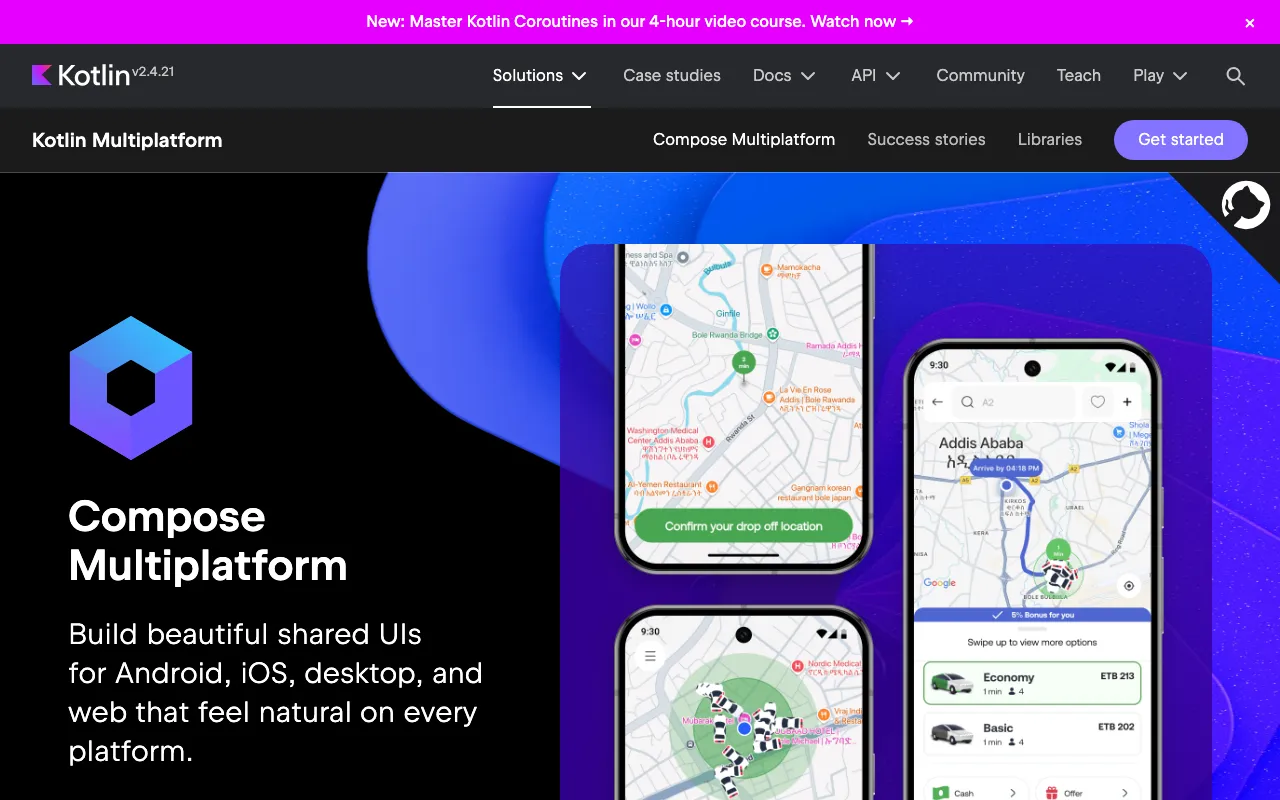
Compose Multiplatform shares Jetpack Compose-style UI code across Android, iOS, desktop JVM targets, and experimental web builds. Kotlin Multiplatform access keeps native APIs and views available where shared UI is not enough.
Overview
Compose Multiplatform is a declarative Kotlin framework for building user interfaces once and shipping them on several platforms. It extends Jetpack Compose APIs so Android developers can reuse patterns when targeting iOS, desktop, or browsers.
On mobile, iOS and Android share most Compose APIs while still allowing embedded native views such as maps through Kotlin Multiplatform interop. Desktop builds use JVM rendering on macOS, Windows, and Linux with additions for menus, shortcuts, windows, and notifications.
Web support targets Kotlin and WebAssembly for predictable browser performance, currently marked beta with feedback channels for early adopters. A separate Compose HTML library targets Kotlin JS only for classic HTML and CSS composables when WASM sharing is not required.
Tooling integrates with IntelliJ IDEA, Android Studio, Compose Hot Reload on desktop, and the wider Kotlin Multiplatform library ecosystem for incremental adoption inside existing apps.
Key features
- Shared Jetpack Compose APIs
- Android and iOS targets
- Hardware-accelerated desktop UI
- Kotlin Wasm web renderer
- Native API interop
- Desktop window integrations
- Compose HTML for Kotlin JS
- Gradual adoption in apps
Use cases
- Cross-platform mobile apps
- Kotlin desktop applications
- Shared business UI layers
- Experimental browser UIs




 Ionic Enterprise


