The Chromium Embedded Framework lets native applications host Chromium-based browsers via stable C and C++ APIs.
Overview
CEF is an open framework for embedding Chromium-class browsers inside third-party applications. It wraps Chromium and Blink complexity behind production-oriented APIs, release branches aligned with Chromium, and downloadable binary distributions.
Typical integration patterns include dropping an HTML5 browser control into an existing native app, hosting a lightweight shell whose UI is mostly web technology, off-screen rendering for custom draw pipelines, and automated testing of web properties.
The host can tie into navigation, resource loading, context menus, printing, JavaScript objects, custom protocols, and plugins while using the same web platform features as Google Chrome. Base support is C and C++; community projects add other language bindings separately.
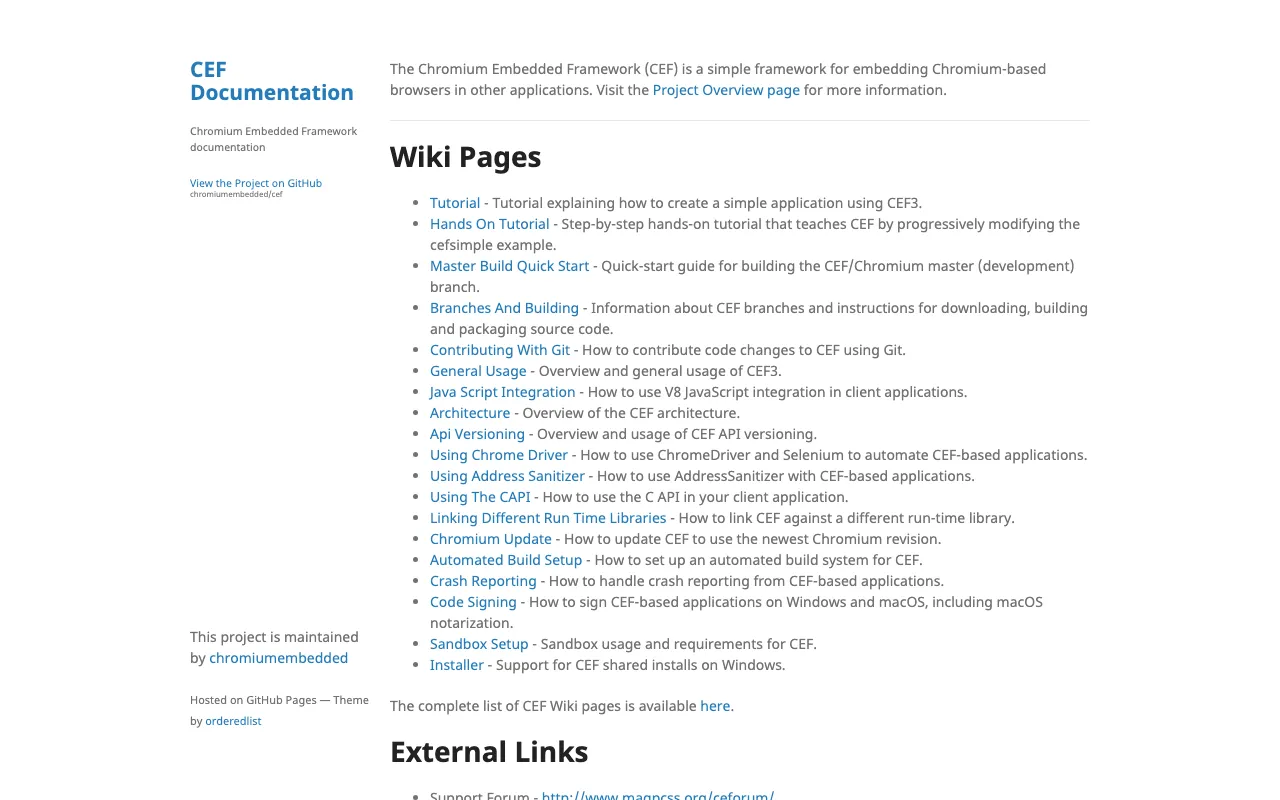
Binary distributions on the project downloads page include everything needed to build without fetching Chromium source. Documentation covers tutorials, architecture, JavaScript integration, sandbox setup, and signing on Windows and macOS.
Key features
- Chromium embedding APIs
- C and C++ host interfaces
- Binary distribution builds
- JavaScript and V8 integration
- Custom protocols and plugins
- Off-screen rendering support
- Navigation and resource control
- Release branches track Chromium
Use cases
- Native apps with web UI
- HTML5 controls in desktop software
- Off-screen web rendering
- Automated web application testing




 Ionic Enterprise


