 Plesk
Linux
Core operating system kernel for Linux systems
The Linux kernel is the core of any Linux operating system. It manages hardware, system resources, and provides fundamental services for other software.

Open-source web hosting control panel for Linux
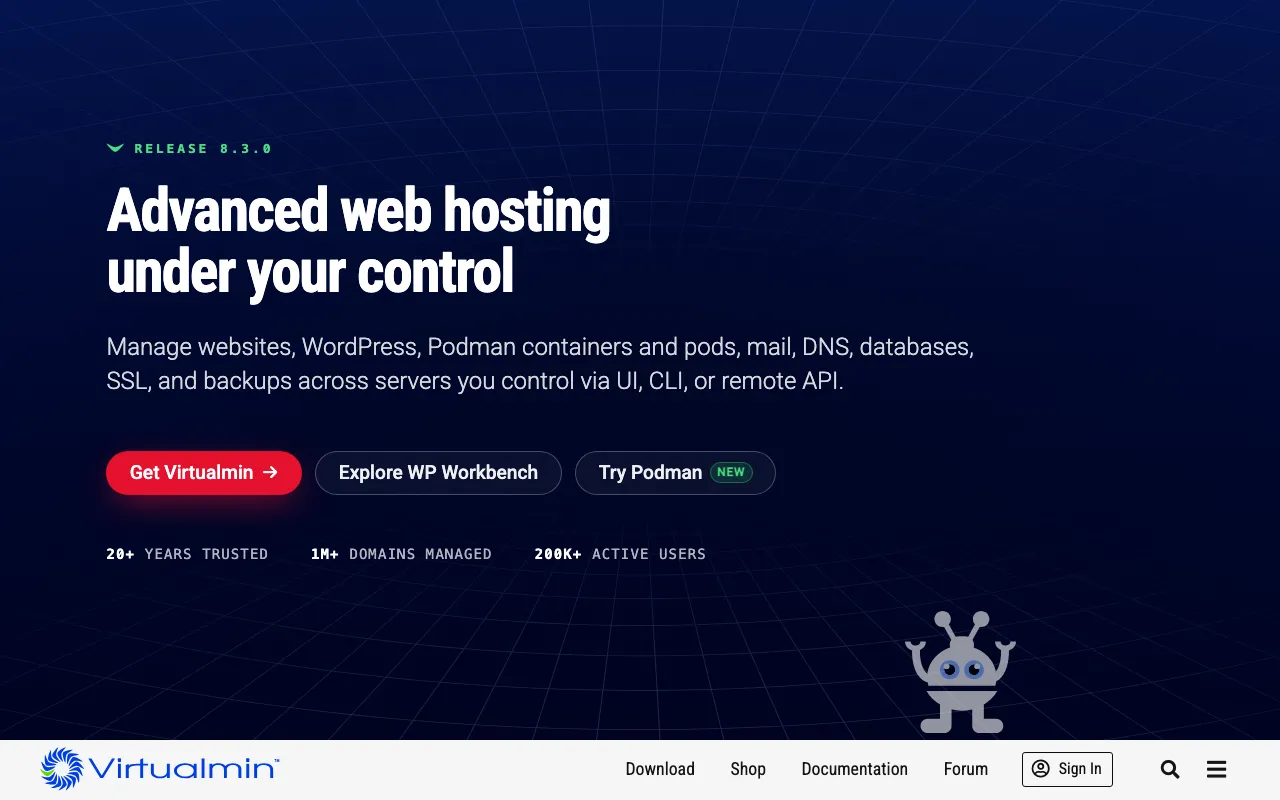
Virtualmin is a Webmin module for virtual web hosting on Linux and BSD. It automates websites, mail, DNS, databases, SSL, and backups from a browser UI or API.
Virtualmin extends Webmin into a hosting control panel for multi-domain Linux and BSD servers. This GPL edition is the core virtual-server module; additional plugins add web server variants, extra database engines, and other optional services. A full LAMP or LEMP stack plus Webmin is required for practical use.
From one interface you configure Apache virtual hosts, issue Let's Encrypt certificates, operate mail with spam and antivirus scanning, provide webmail, manage MySQL or MariaDB and PostgreSQL, create FTP and SSH users, install common web applications, tune PHP across versions, and run analytics, logging, and backup jobs. Imports from cPanel, Plesk, and DirectAdmin backup formats are supported.
An automated installer from the Virtualmin project is recommended for supported CentOS, Ubuntu, and Debian platforms because a complete hosting stack involves many packages and config files. The UI is responsive with multiple themes; operations are also available through CLI tools and a remote API.
Virtualmin is built on Webmin and has been maintained with regular releases since the early 2000s. Commercial Virtualmin Pro adds further applications and support options, while the GPL module remains the open-source foundation.
Virtualmin doesn't name these products itself, but its own description shows it does the same job.
Core operating system kernel for Linux systems
The Linux kernel is the core of any Linux operating system. It manages hardware, system resources, and provides fundamental services for other software.

Modular toolkit for assembling container systems
Moby bundles container build, runtime, registry, and orchestration components so integrators can craft custom container platforms instead of using a single fixed product.

Automated Windows VMs inside Docker with KVM acceleration
Dockur Windows runs full Windows desktops or servers in a container with hands-free ISO install. It supports many releases, RDP, shared folders, and flexible networking.

Web UI for Docker, Swarm, and Kubernetes fleets
Portainer Community Edition offers a browser-based console to manage Docker, Swarm, Podman, Kubernetes, and ACI environments from one place. A commercial edition adds enterprise governance, GitOps, and support.
Secure lightweight microVM monitor for serverless workloads
Firecracker is a virtualization stack for running container and function workloads in microVMs. It pairs hardware isolation with low overhead for multi-tenant serverless-style hosting.

Personal cloud OS around the Docker app ecosystem
CasaOS is a home-oriented personal cloud system with a simple web UI to install Docker apps, manage files and drives, and monitor apps on your own hardware.