Vibe-Trading
Natural-language finance research and backtesting agent
Vibe-Trading turns market questions into runnable research via CLI, Web, API, and agent tools. It covers data, backtests, swarm analysis, journals, and saved research artifacts.

Multi-agent terminal for finance research questions
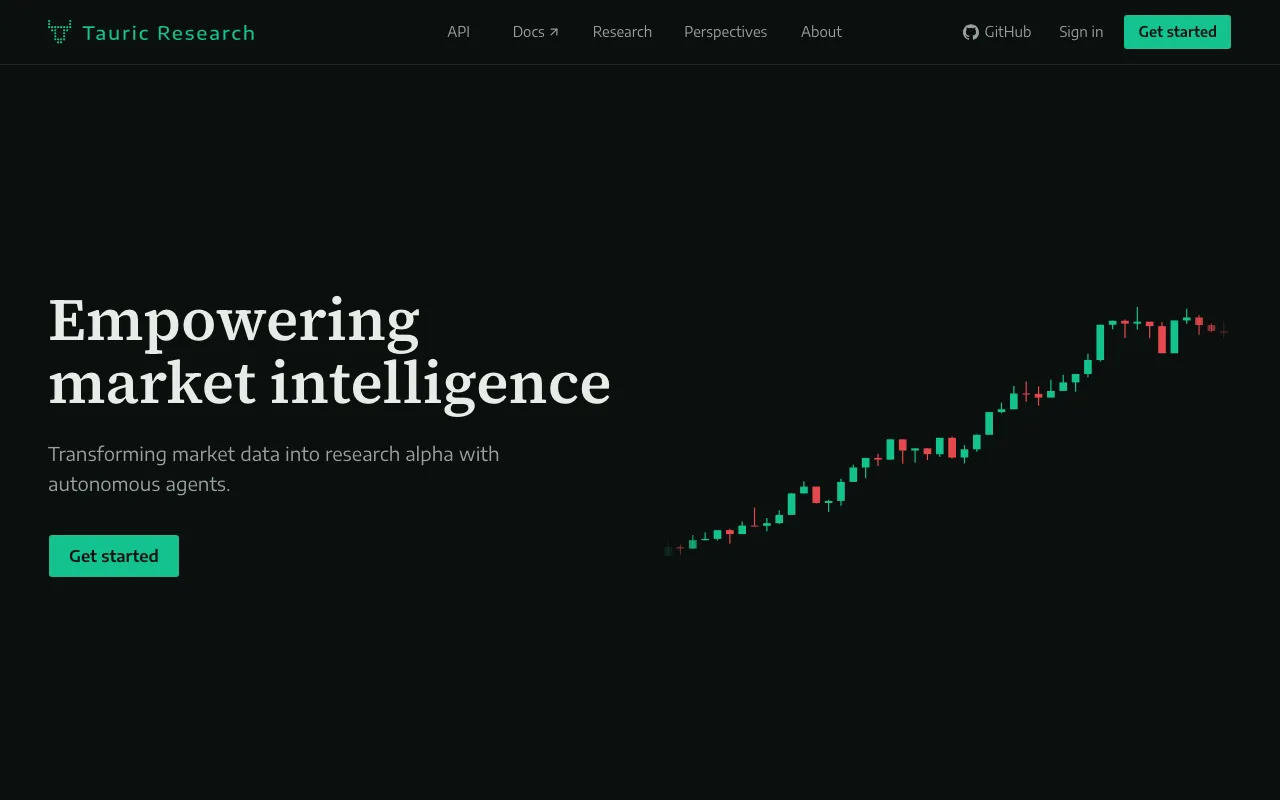
TradingAgents is a command-line research assistant that routes finance questions through specialist agents, cites data sources in answers, and supports multiple LLM providers.
TradingAgents targets agentic finance research from a terminal interface. Users install the package, supply API keys for Tauric or other model providers, and ask questions that trigger multi-step analysis rather than trade execution.
A primary agent plans work, pulls market and filing data through bundled tools, and delegates to specialists covering equity fundamentals, macro strategy, quantitative metrics, and risk themes. Markdown-defined skills cover company snapshots, valuation workflows, market briefs, and portfolio reviews; teams can add custom agents and skills the same way.
Built-in commands switch models, resume sessions, export PDF or Markdown reports, and open help. Plan mode lets the agent propose a research outline before deep dives. Provider configuration supports hosted APIs, subscription logins, or self-hosted inference endpoints.
Answers label figures with sources and append numbered reference lists. The tool integrates with Tauric data services for filings, statements, and news when users supply the appropriate keys.
Natural-language finance research and backtesting agent
Vibe-Trading turns market questions into runnable research via CLI, Web, API, and agent tools. It covers data, backtests, swarm analysis, journals, and saved research artifacts.

Open-source personal AI assistant running on your devices and chat apps
Open-source AI assistant that runs on your own computer and answers in chat apps such as WhatsApp, Telegram, Slack and Discord. State, memory and credentials stay on your hardware.

Open-source plugin-based agent harness from DeepSeek
DeepSeek Harness is an open-source agent harness built on an everything-is-a-plugin architecture powered by Cordis. It offers a web UI, desktop app, and extensible plugins for daily work, coding, and automation.

Self-improving open-source AI agent with memory, skills and messaging gateway
Open-source AI agent from Nous Research that keeps persistent memory, creates skills from experience, and runs from a terminal, desktop app or messaging platforms with any model provider.

Run open AI models locally or in the cloud
Ollama runs open language models such as Gemma, Qwen, DeepSeek and gpt-oss on macOS, Windows and Linux, locally or in the cloud. It offers a CLI, a REST API, and Python and JavaScript libraries.
Gradio web interface for Stable Diffusion
AUTOMATIC1111’s web UI wraps Stable Diffusion with txt2img, img2img, inpainting, upscalers, training tabs, and a settings-driven Gradio front end. Install scripts target NVIDIA and AMD GPUs plus Apple Silicon.
 ChatGPT
 Anthropic Claude