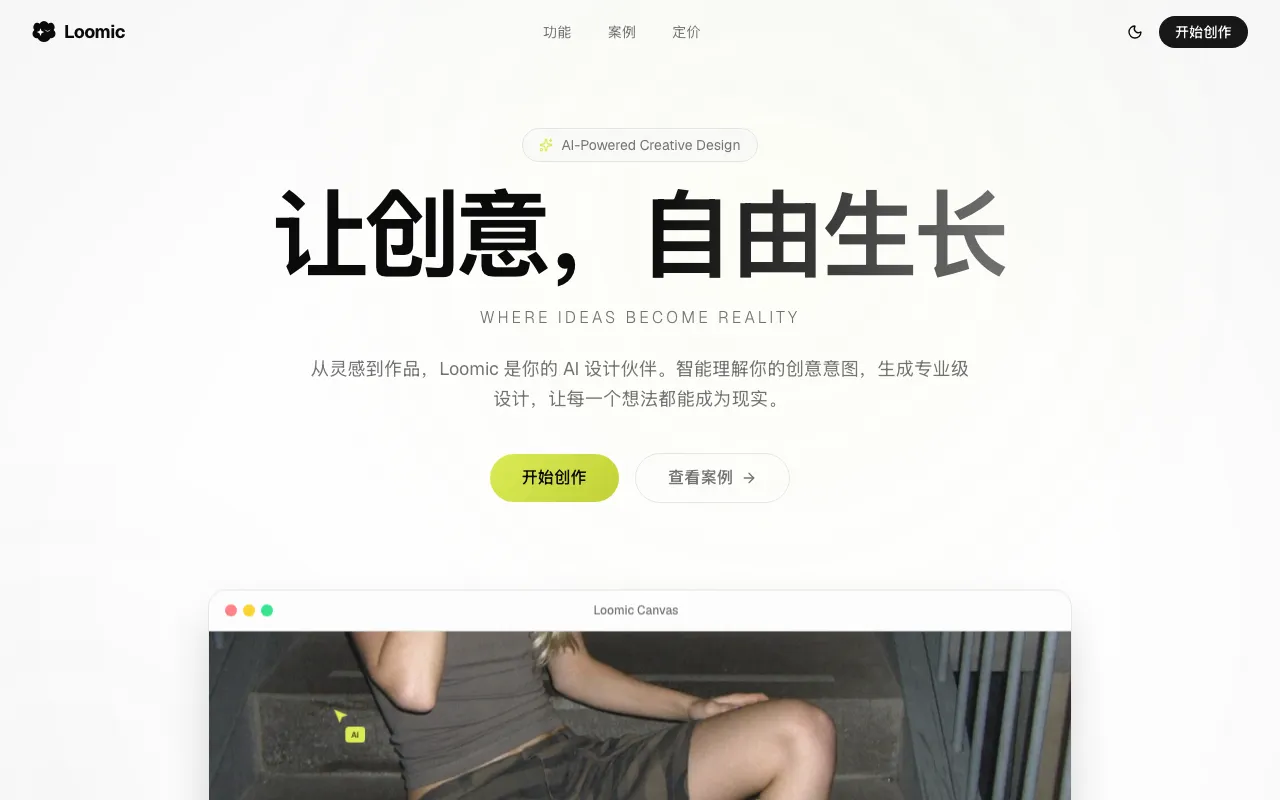
Loomic is a self-hostable creative stack where you chat on an infinite Excalidraw canvas to generate and arrange images and video. LangGraph agents call Google, OpenAI, and Replicate models with your API keys.
Overview
Loomic recreates the idea of canvas-driven AI design tools as fully open software you can deploy yourself. A Next.js front end and Fastify API host conversational editing: you describe changes, and an agent places or restyles generated assets directly on the canvas instead of forcing a traditional timeline workflow.
Image generation integrates numerous provider models, including Google Imagen and Gemini routes, OpenAI image endpoints, and many Replicate models. Video generation covers Google Veo variants plus third-party video models with optional audio. Brand kits keep colors, fonts, and logos consistent across generations, and a credit system can gate usage when you enable payments.
The architecture relies on Supabase for PostgreSQL, authentication, storage, and PGMQ job queues, with separate worker processes for long renders. Setup documentation walks through cloning the monorepo, applying Supabase migrations, and configuring provider keys for a private instance.
Key features
- Chat-driven infinite canvas editing
- Excalidraw-based layout surface
- Fifteen-plus image model integrations
- Video models including Veo and Kling
- Brand kit aware generation
- LangGraph agent orchestration
- Supabase auth, storage, and queue
- Self-hosted monorepo deployment
Use cases
- Private alternative to closed AI design suites
- Storyboarding marketing visuals collaboratively
- Iterating creative direction in natural language
- Teams that must keep assets on own infra
Open-source alternative to
CCanva“Open-source AI canvas design agent — alternative to Lovart / CapCut Video Studio / Canva AI. Chat-driven image & video generation on an infinite canvas.” source
 CapCut
“Open-source alternative to Lovart / CapCut Video Studio / Canva AI” source



 Anthropic Claude
 ChatGPT