Lingo.dev lets teams build localization engines with glossaries, brand voice, rules, and model routing. Developers reach those engines via CLI, API, CI/CD, GitHub App, or MCP.
Overview
Lingo.dev is a localization engineering platform where teams configure stateful translation engines and run them centrally. Each engine applies model choices, brand voice, linguistic rules, glossaries, and automated reviewers in a fixed order so every request follows the same policy.
Engines are shared across products or content types while glossaries and rulesets can attach to multiple engines at once. Teams can compare engines in a playground before changes go live, measuring output against raw models or alternate configurations.
Developers integrate through a CLI that pushes source files and pulls translations from repositories, a synchronous or async HTTP API, GitHub Actions and other CI runners, a GitHub App that opens translation pull requests on pushes, and an MCP interface for coding agents to manage engines and terminology from the editor.
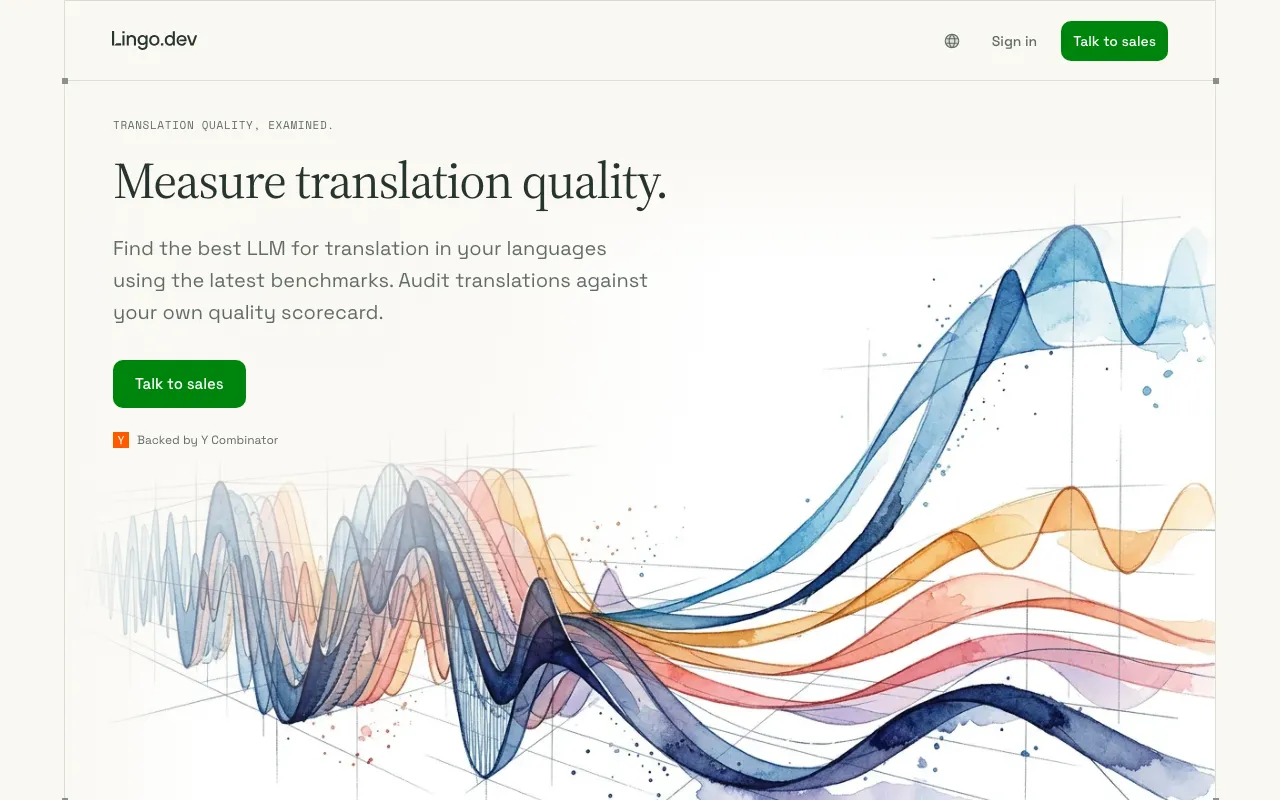
The platform supports many file formats including JSON, YAML, Markdown, MDX, PO, XLIFF, Flutter ARB, mobile string files, and SubRip. Website material also describes auditing translation quality against scorecards and connecting existing TMS, CMS, and GitHub workflows.
Key features
- Configurable localization engines
- Glossaries and brand voice rules
- LLM model routing per locale
- CLI push and pull workflows
- GitHub App translation PRs
- CI/CD CLI integration
- MCP for coding agents
- Translation quality auditing
Use cases
- Repo-based i18n in CI
- Per-product translation policies
- Agent-assisted glossary updates
- Quality audits across TMS and CMS