Kubernetes
Open-source container scheduling and management system
Kubernetes (K8s) manages containerized applications across many hosts. It automates deployment, scaling, and ongoing operations for grouped containers.

Open-source Kubernetes multi-cluster management panel
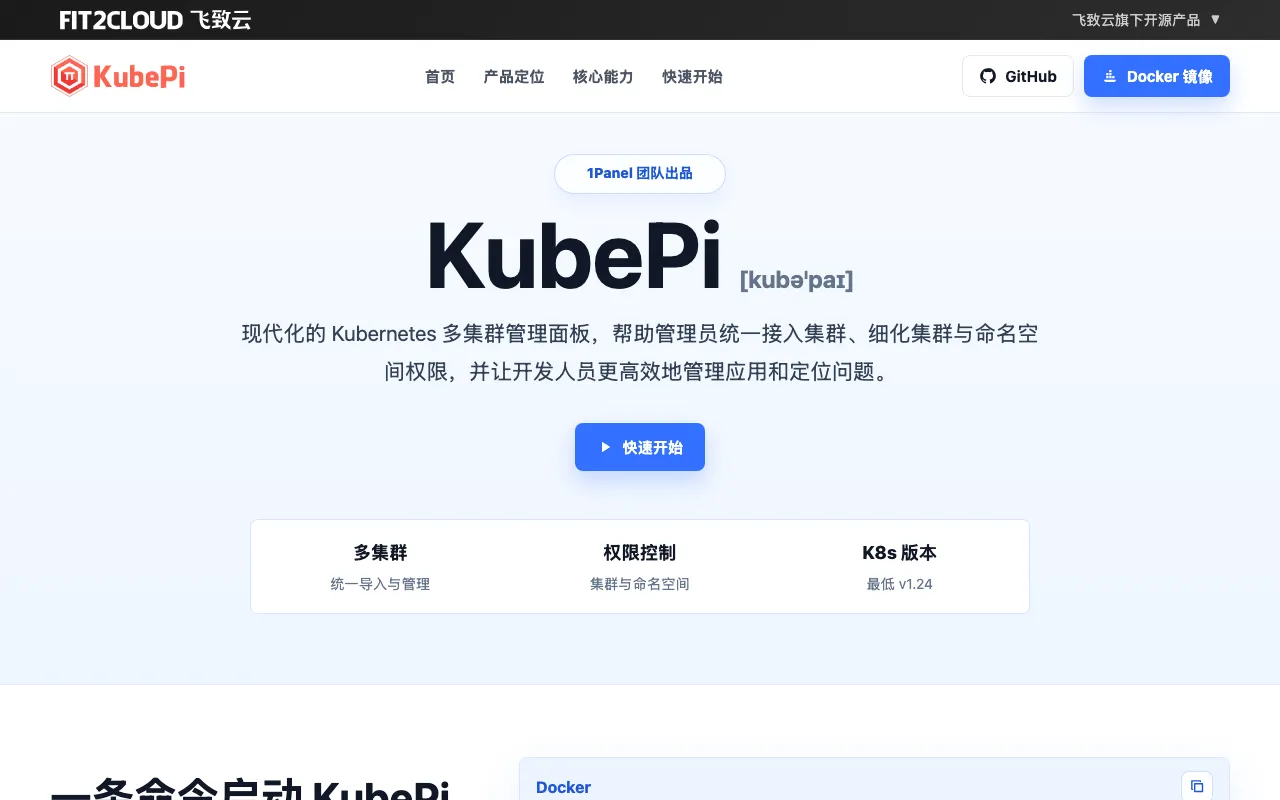
KubePi is a web-based Kubernetes dashboard for importing multiple clusters, fine-grained access control, and application troubleshooting.
KubePi is a modern open-source Kubernetes dashboard from the 1Panel team. It gives administrators a single web console to register several clusters and assign users access at cluster and namespace scope, while developers manage and debug applications without juggling many kubectl contexts.
The product centers on multi-cluster operations: imported clusters appear in one interface for resource views and day-to-day tasks. Permission boundaries tie teams to the clusters and namespaces they are allowed to see, which supports shared platforms where roles differ.
Developers use the console to inspect resources, manage running applications, and follow troubleshooting flows when services misbehave. Operations teams can connect observability tooling such as Prometheus and Grafana so metrics and audit-oriented signals sit alongside routine cluster actions.
Deployment is oriented toward quick setup: a Docker image can be started with one command, and the 1Panel app store offers a graphical install path. After login, you connect your Kubernetes clusters to begin managing them from the UI.
Open-source container scheduling and management system
Kubernetes (K8s) manages containerized applications across many hosts. It automates deployment, scaling, and ongoing operations for grouped containers.

Self-hostable PaaS for apps, databases, and one-click services
Coolify deploys static sites, databases, and full-stack apps on servers you control, with a dashboard similar to managed hosting platforms. Configurations stay on your machines over SSH.
Automated Windows VMs inside Docker with KVM acceleration
Dockur Windows runs full Windows desktops or servers in a container with hands-free ISO install. It supports many releases, RDP, shared folders, and flexible networking.

Web UI for Docker, Swarm, and Kubernetes fleets
Portainer Community Edition offers a browser-based console to manage Docker, Swarm, Podman, Kubernetes, and ACI environments from one place. A commercial edition adds enterprise governance, GitOps, and support.

Self-hostable PaaS for apps and databases
Dokploy is a self-hostable platform-as-a-service for deploying applications and databases on your own VPS. It supports Docker, Compose, multi-server setups, backups, and monitoring.

Service mesh for securing and observing microservices
Istio layers onto Kubernetes and other platforms to manage traffic, security, and telemetry for microservices with minimal application code changes.
 Heroku
 Netlify