 cPanel
 Plesk
Linux
Core operating system kernel for Linux systems
The Linux kernel is the core of any Linux operating system. It manages hardware, system resources, and provides fundamental services for other software.

Lightweight Linux web and mail hosting control panel
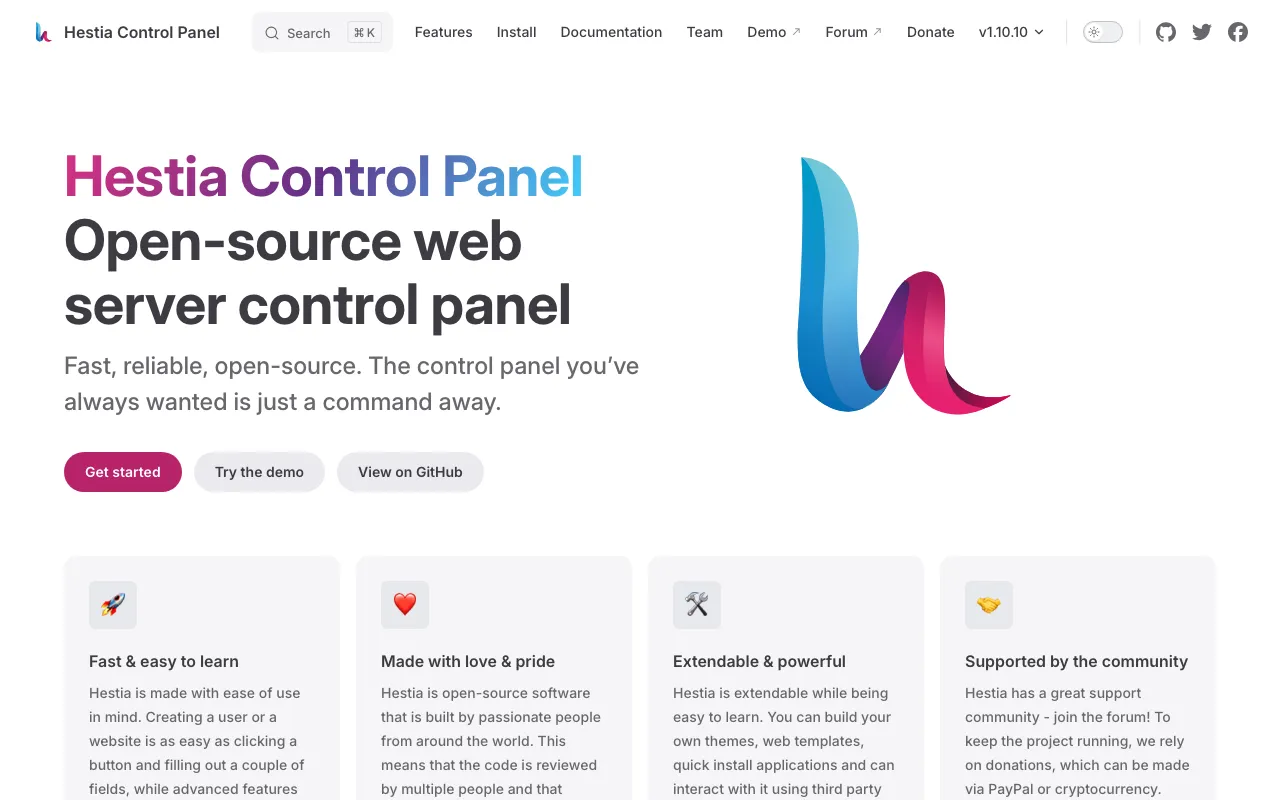
Hestia Control Panel is a web and CLI dashboard for managing websites, mail, DNS, and databases on Linux servers. It bundles common daemons so administrators avoid configuring each service separately.
Hestia Control Panel is designed for server administrators who need one place to deploy and operate web domains, mail accounts, DNS zones, and databases. The product provides a browser UI and command-line interface so routine hosting tasks do not require manual setup of each underlying component.
Supported stacks include Apache2 and NGINX with PHP-FPM across multiple PHP versions, a Bind DNS server with clustering options, POP/IMAP/SMTP mail with anti-virus and anti-spam tooling plus Roundcube webmail, MariaDB or MySQL and optional PostgreSQL, Let's Encrypt SSL including wildcards, and a firewall with brute-force detection using iptables, fail2ban, and ipset. The panel targets recent Debian and Ubuntu releases on modern Linux servers.
Installation expects a fresh Linux server. An installation script is downloaded and run as root, with optional flags to enable only the feature bundles you need, and automatic updates can be managed from server settings. After install, administrators use the web dashboard to create users, sites, mail domains, and databases. The project describes itself as extendable via themes, web templates, quick-install apps, and a third-party API.
HestiaCP is open source software descended from the VestaCP project, aimed at individuals and small providers who want a consolidated hosting control plane on a VPS or dedicated machine rather than juggling separate panels for each service.
Hestia Control Panel doesn't name these products itself, but its own description shows it does the same job.
Core operating system kernel for Linux systems
The Linux kernel is the core of any Linux operating system. It manages hardware, system resources, and provides fundamental services for other software.

Modular toolkit for assembling container systems
Moby bundles container build, runtime, registry, and orchestration components so integrators can craft custom container platforms instead of using a single fixed product.

Automated Windows VMs inside Docker with KVM acceleration
Dockur Windows runs full Windows desktops or servers in a container with hands-free ISO install. It supports many releases, RDP, shared folders, and flexible networking.

Web UI for Docker, Swarm, and Kubernetes fleets
Portainer Community Edition offers a browser-based console to manage Docker, Swarm, Podman, Kubernetes, and ACI environments from one place. A commercial edition adds enterprise governance, GitOps, and support.

Secure lightweight microVM monitor for serverless workloads
Firecracker is a virtualization stack for running container and function workloads in microVMs. It pairs hardware isolation with low overhead for multi-tenant serverless-style hosting.

Personal cloud OS around the Docker app ecosystem
CasaOS is a home-oriented personal cloud system with a simple web UI to install Docker apps, manage files and drives, and monitor apps on your own hardware.