Hackingtool
AI-guided terminal toolkit for authorized security testing
Hackingtool bundles many security utilities in one console with optional AI help to pick tools and commands. It targets Linux and macOS and is meant for authorized testing only.

Origin IP exposure research for reverse-proxy sites
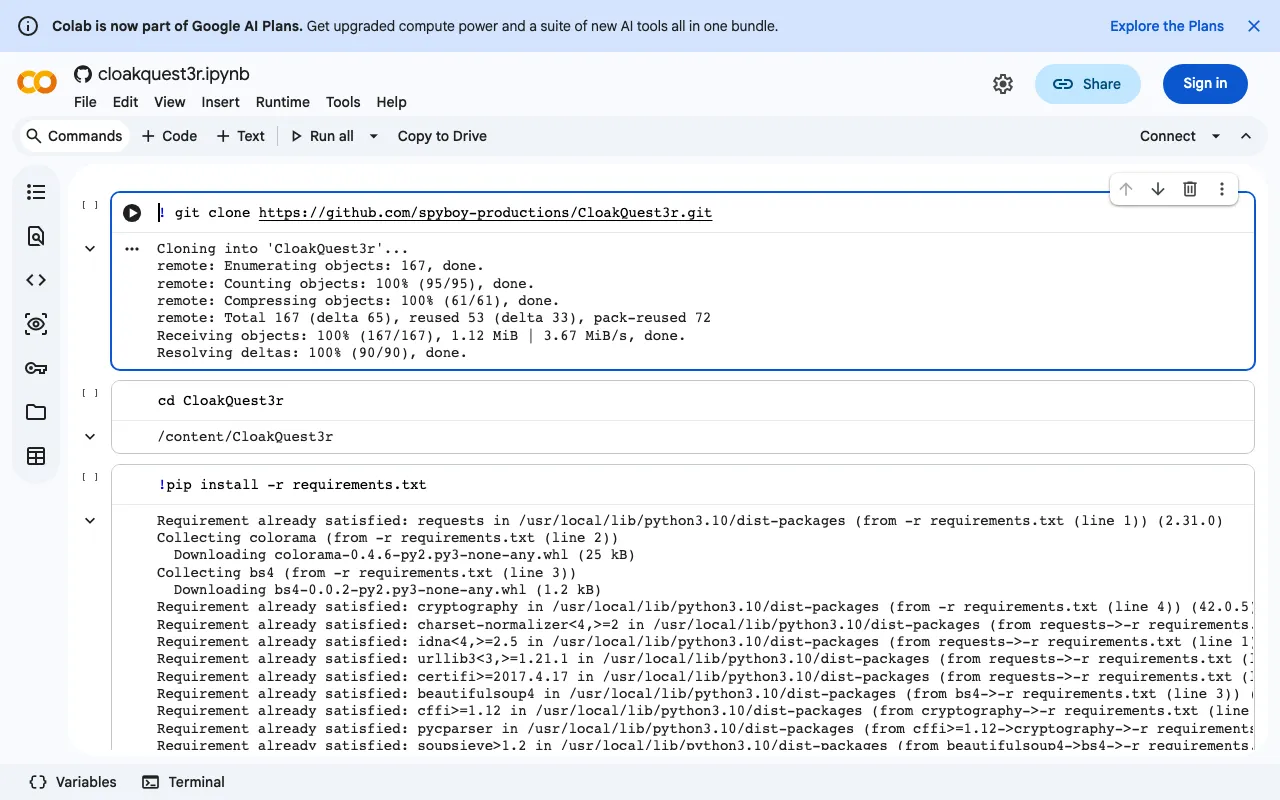
CloakQuest3r is a Python command-line security research tool that analyzes sites behind Cloudflare or similar CDNs and reverse proxies. It helps assess whether origin server addresses may be exposed through misconfigurations.
CloakQuest3r targets websites that use Cloudflare or other reverse proxy and CDN services to hide origin IPs. Misconfigured subdomains, legacy DNS, or weakly secured services can still reveal the underlying infrastructure.
The tool combines subdomain enumeration with passive analysis so security professionals, penetration testers, and administrators can check for unintended exposure of origin addresses. It is intended for authorized testing, defensive review, and hardening work.
Workflow checks whether the target uses Cloudflare, fetches historical IP data through ViewDNS, scans subdomains with threaded requests, and analyzes SSL certificates for hosting clues. Optional SecurityTrails API integration adds historical IP data when a key is set in config.ini.
Output summarizes how many subdomains were scanned and found, timing, and any discovered real IP addresses tied to hosts. The project can be run online via Google Colab or locally with a single domain argument on the command line.
AI-guided terminal toolkit for authorized security testing
Hackingtool bundles many security utilities in one console with optional AI help to pick tools and commands. It targets Linux and macOS and is meant for authorized testing only.

Community-driven YAML vulnerability scanner for apps and infrastructure
Nuclei scans applications, APIs, networks, DNS, and cloud setups for security issues using customizable YAML templates. Security researchers contribute templates for trending vulnerabilities.
Self-hosted autonomous penetration testing platform with evidence
ARTEX runs multi-agent offensive security tests on your infrastructure, linking findings to captured HTTP traffic, scope rules, and human approval gates.

Mobile device compromise forensics toolkit
MVT gathers and analyzes forensic traces from Android and iOS devices to spot signs of spyware or targeting. It is a command-line toolkit for investigators, not casual self-checks.

Cross-platform browser forensic data export CLI
HackBrowserData decrypts and exports passwords, cookies, history, bookmarks, and more from many Chromium, Firefox, and Safari profiles on Windows, macOS, and Linux. It is aimed at authorized security research, incident response, and DFIR.

Command-line vulnerability scanner for images and filesystems
Grype scans container images, directories, and SBOMs for known security vulnerabilities. It supports OpenVEX to filter or enrich results and installs via common package managers or containers.