Kubernetes
Open-source container scheduling and management system
Kubernetes (K8s) manages containerized applications across many hosts. It automates deployment, scaling, and ongoing operations for grouped containers.

Open-source infrastructure asset graph mapper
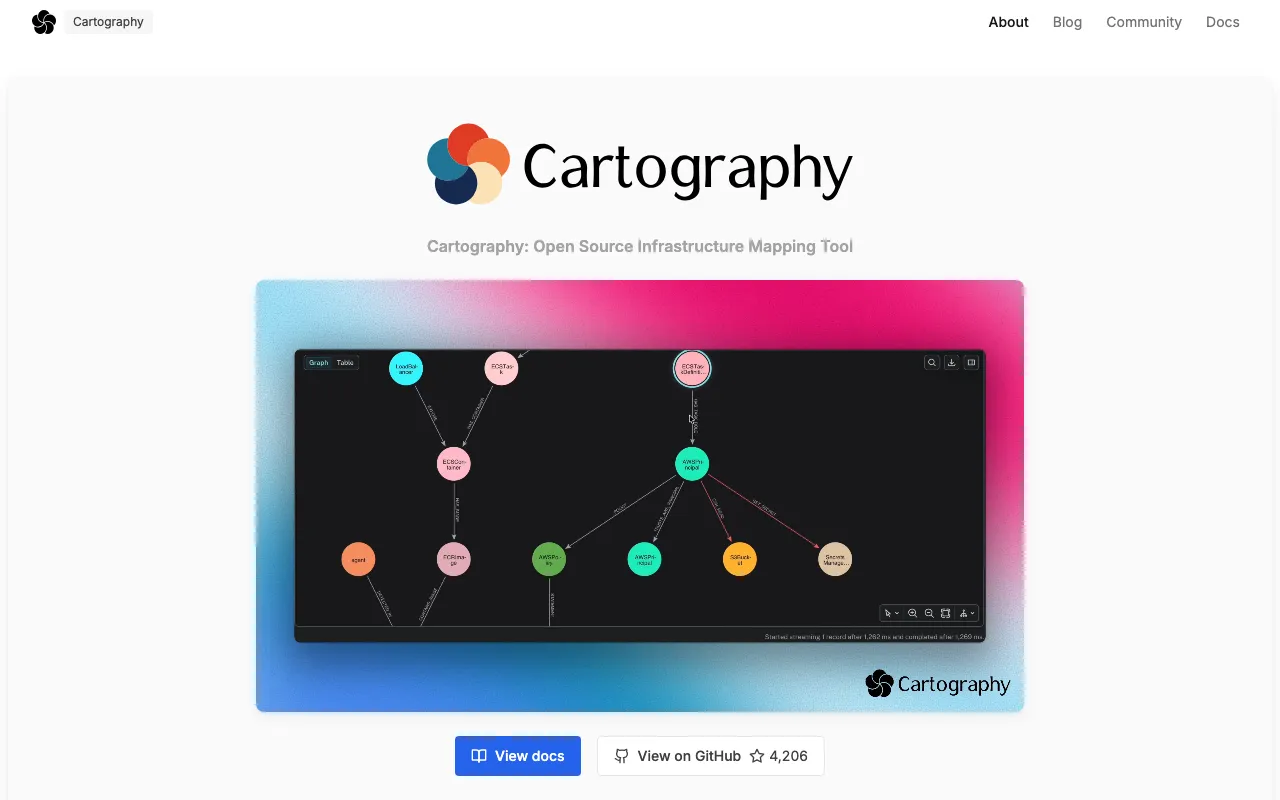
Python tool that ingests cloud and security platform data into a Neo4j graph. Teams query relationships across identity, network, and vulnerability context.
Cartography collects infrastructure assets and how they relate to each other, then stores that picture in a Neo4j graph database. It is aimed at security and platform teams who need a unified view across many environments rather than siloed consoles.
The tool connects to a large set of providers and products, including major public clouds, Kubernetes, identity systems, code hosting, endpoint security, and specialized SaaS APIs. Sync jobs populate nodes and edges so analysts can traverse access, exposure, and dependency paths in one place.
Typical workflows start by installing the Python package, running a Neo4j instance, and syncing a first data source such as AWS. After the graph is populated, users run graph queries and can inspect or execute bundled security rules against the stored data.
The project positions itself as an open infrastructure mapping tool that answers questions about who can reach which data stores, internet-exposed compute, vulnerability exposure, network paths, and AI agents in production.
Cartography doesn't name these products itself, but its own description shows it does the same job.
Open-source container scheduling and management system
Kubernetes (K8s) manages containerized applications across many hosts. It automates deployment, scaling, and ongoing operations for grouped containers.
AI-guided terminal toolkit for authorized security testing
Hackingtool bundles many security utilities in one console with optional AI help to pick tools and commands. It targets Linux and macOS and is meant for authorized testing only.

Self-hostable PaaS for apps, databases, and one-click services
Coolify deploys static sites, databases, and full-stack apps on servers you control, with a dashboard similar to managed hosting platforms. Configurations stay on your machines over SSH.
Automated Windows VMs inside Docker with KVM acceleration
Dockur Windows runs full Windows desktops or servers in a container with hands-free ISO install. It supports many releases, RDP, shared folders, and flexible networking.

Web UI for Docker, Swarm, and Kubernetes fleets
Portainer Community Edition offers a browser-based console to manage Docker, Swarm, Podman, Kubernetes, and ACI environments from one place. A commercial edition adds enterprise governance, GitOps, and support.

Self-hostable PaaS for apps and databases
Dokploy is a self-hostable platform-as-a-service for deploying applications and databases on your own VPS. It supports Docker, Compose, multi-server setups, backups, and monitoring.
 Heroku
 Netlify