Hackingtool
AI-guided terminal toolkit for authorized security testing
Hackingtool bundles many security utilities in one console with optional AI help to pick tools and commands. It targets Linux and macOS and is meant for authorized testing only.

Web tool for navigating and annotating ATT&CK matrices
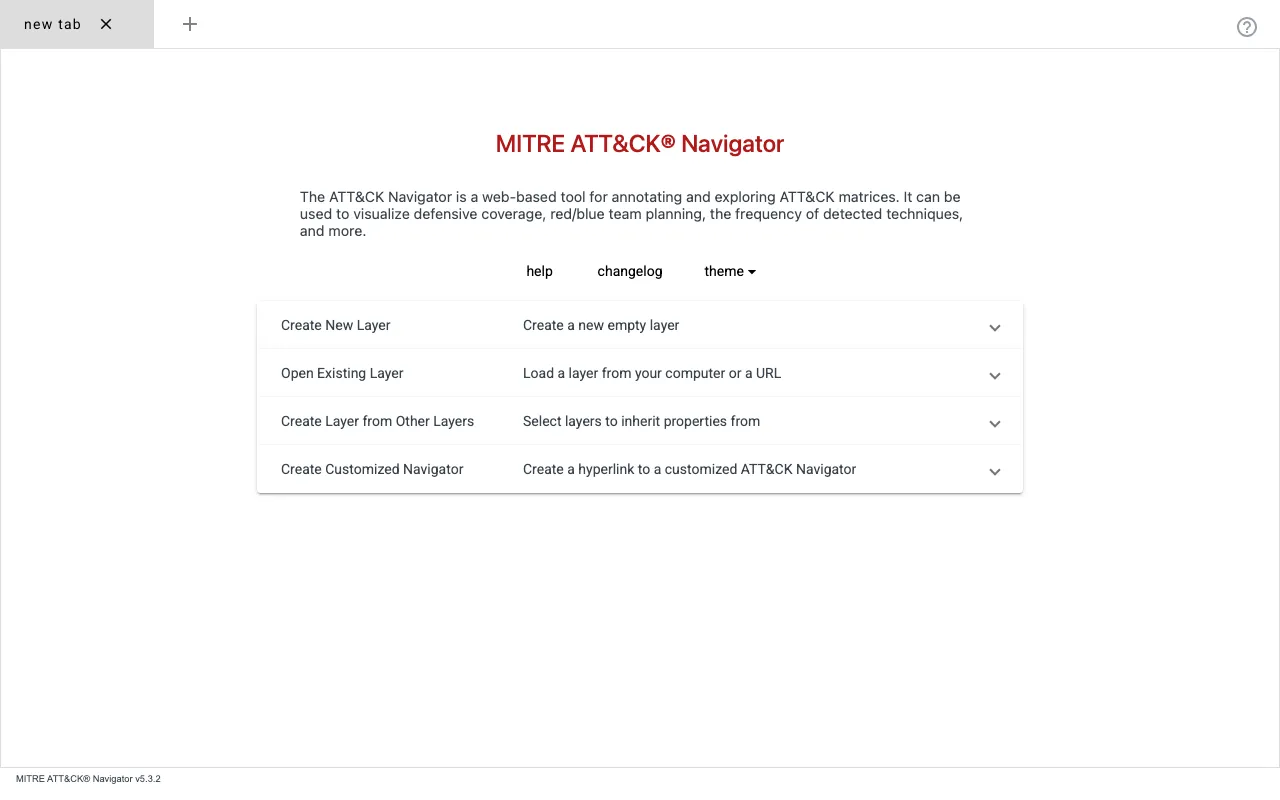
ATT&CK Navigator is a browser-based app to view, color, and annotate MITRE ATT&CK matrix cells via custom layers.
ATT&CK Navigator is a web application for basic navigation and annotation of MITRE ATT&CK matrices. It replaces spreadsheet-style matrix work with a generic matrix viewer where you color cells, add comments, assign numeric values, and similar markings.
Users define layers, which are custom views of the knowledge base, such as a platform-specific slice or techniques associated with a given adversary. Layers can be built interactively in the UI or generated programmatically and then opened in Navigator. Current releases support multiple ATT&CK domains in one instance and can load older ATT&CK versions down to v4.
A public instance is hosted on GitHub Pages; layer files uploaded there stay client-side and are not stored server-side. For sensitive layers, the documentation recommends running your own instance. You can install dependencies locally, run an Angular development server, or build and serve deployment artifacts with Docker.
Configuration can pull ATT&CK content from a collection index URL, TAXII 2.0 or 2.1 servers, or local STIX bundle files. Optional defaults load specific layers at startup, and features such as comments or other controls can be toggled off in configuration.
AI-guided terminal toolkit for authorized security testing
Hackingtool bundles many security utilities in one console with optional AI help to pick tools and commands. It targets Linux and macOS and is meant for authorized testing only.

Community-driven YAML vulnerability scanner for apps and infrastructure
Nuclei scans applications, APIs, networks, DNS, and cloud setups for security issues using customizable YAML templates. Security researchers contribute templates for trending vulnerabilities.
Self-hosted autonomous penetration testing platform with evidence
ARTEX runs multi-agent offensive security tests on your infrastructure, linking findings to captured HTTP traffic, scope rules, and human approval gates.

Mobile device compromise forensics toolkit
MVT gathers and analyzes forensic traces from Android and iOS devices to spot signs of spyware or targeting. It is a command-line toolkit for investigators, not casual self-checks.

Cross-platform browser forensic data export CLI
HackBrowserData decrypts and exports passwords, cookies, history, bookmarks, and more from many Chromium, Firefox, and Safari profiles on Windows, macOS, and Linux. It is aimed at authorized security research, incident response, and DFIR.

Command-line vulnerability scanner for images and filesystems
Grype scans container images, directories, and SBOMs for known security vulnerabilities. It supports OpenVEX to filter or enrich results and installs via common package managers or containers.