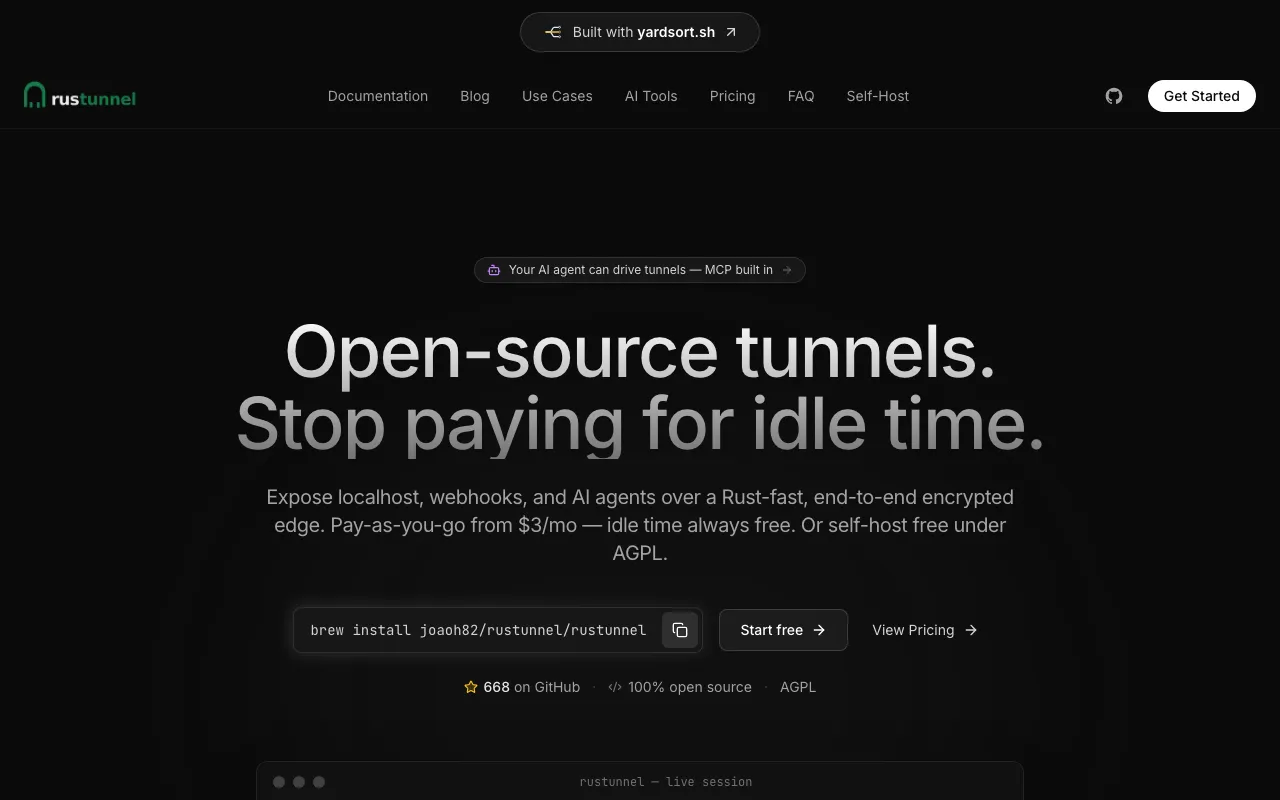
rustunnel forwards local services through TLS WebSocket tunnels to a server you self-host or a managed edge, with dashboards, metrics, audit logs, and an MCP server for AI setup.
Overview
rustunnel connects a lightweight client to an edge server that terminates TLS and maps traffic to local HTTP, HTTPS, TCP, or UDP ports. You can run the control plane yourself on Ubuntu with systemd or Docker, or use hosted regions in Europe, the US, and Asia Pacific.
The server exposes a dashboard, Prometheus metrics, and audit logging. Clients support JSON output, config files, tokens, and custom subdomains on paid plans. An MCP server helps AI tools configure tunnels in Cursor and similar agents.
Managed plans include a free hobby tier with random hostnames and metered pay-as-you-go bandwidth. Self-hosted deployments are unmetered on your hardware.
Key features
- HTTP, TCP and UDP tunnels
- TLS WebSocket transport
- Self-hosted or managed edge
- Live dashboard and metrics
- Audit logging
- MCP server for agents
- Docker and systemd deployment
- Multi-region hosted edges
Use cases
- Expose webhooks during development
- Self-host a team tunnel server
- Share TCP services securely
- Monitor tunnel usage centrally
- Configure tunnels from an AI IDE
Does the same job as
rustunnel doesn't name these products itself, but its own description shows it does the same job.