Redash connects to SQL and NoSQL sources so teams can query, visualize, and share data. Work stays in the browser with shareable URLs and scheduled refreshes.
Overview
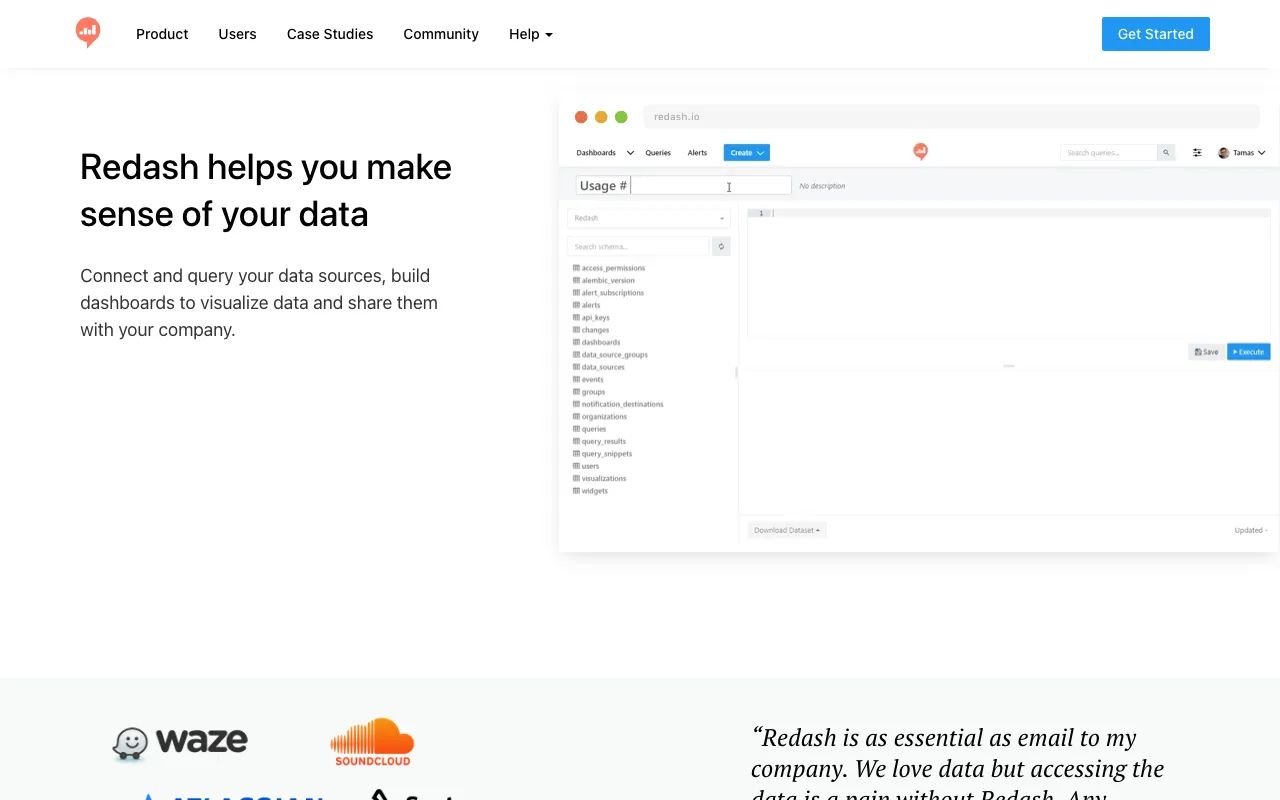
Redash is built so people across an organization can explore, query, visualize, and share data from varied sources. SQL users compose queries in an editor with schema browsing and auto-complete, build charts with drag-and-drop, and combine visualizations on dashboards.
Everything runs in the browser with shareable links. Users can schedule automatic chart and dashboard updates, define alert conditions when data changes, and collaborate by sharing visualizations and their underlying queries. The REST API exposes the same capabilities available in the web interface.
The product ships with native connectors for dozens of databases and platforms, including PostgreSQL, MySQL, BigQuery, Redshift, MongoDB, Snowflake, ClickHouse, Elasticsearch, and many others. The data source layer is extensible for additional connectors.
Organizations can run their own Redash instance, with setup options including ready-made cloud images. Redash is open source so teams can customize and extend it without vendor lock-in.
Key features
- Browser-based query editor with schema browser
- Drag-and-drop visualizations and dashboards
- Scheduled chart and dashboard refreshes
- Data change alerts with defined conditions
- Shareable visualization and query links
- REST API matching UI capabilities
- Support for many SQL and NoSQL sources
- Extensible data source connector API
Use cases
- Exploring warehouse data with SQL
- Building team KPI dashboards
- Sharing reports through browser URLs
- Alerting when metrics cross thresholds
- Connecting multiple databases in one place
Does the same job as
Redash doesn't name these products itself, but its own description shows it does the same job.

 Sigma