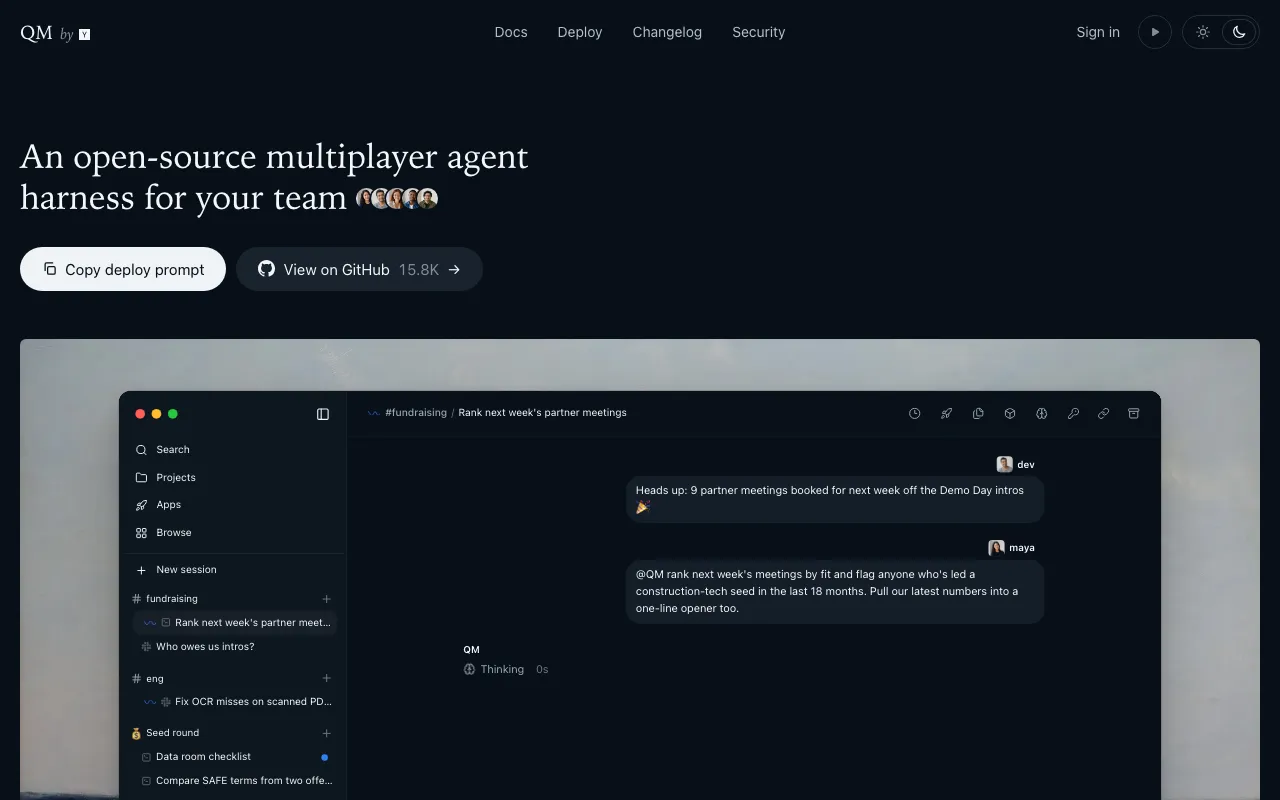
QM is a multiplayer agent harness where each person and shared room gets isolated memory, files, and sandboxes. It runs in your cloud with your models and keys, with optional Slack.
Overview
QM is built for teams rather than a single personal assistant. Each member receives a private workspace, and the same agent can also participate in shared Slack channels, group messages, and projects. People and rooms each carry scoped memory, files, keychain views, permissions, cron jobs, web apps, and durable sandboxes.
Agents stay active in the background: scheduled tasks, watches, and inbound webhooks continue while users are away. Deployment targets the operator’s cloud account using the qm CLI, with one-click options described for providers such as DigitalOcean, E2B, and Render, plus a local Docker test setup. Slack is optional; the web app and desktop app work without it, and identity settings carry across connected surfaces.
Organization admins configure models, security posture, and sharing rules. Security modes range from strict human approval on tool calls to automatic private-network blocking or fully open tool execution with audited content screening. The agent runs commands as the signed-in user inside per-scope sandboxes while Postgres stores durable state.
Typical capabilities described include searching internal notes and mail, building internal web apps, inbox triage with drafts, working in git repositories, and posting project updates to shared channels.
Key features
- Per-user and per-room scoped memory and files
- Slack and web surfaces with shared identity
- Always-on crons, watches, and webhooks
- Org admin model and security configuration
- Durable per-scope agent sandboxes
- Custom internal web apps for teams
- Shareable scope-owned skills
- qm CLI deployment to operator cloud
Use cases
- Team agents in Slack channels and projects
- Private workspace assistants with shared rooms
- Scheduled inbox triage and draft replies
- Internal tools published to selected colleagues
- Repository work such as tests and CI checks


 Fathom
 Fireflies.ai




 Slack