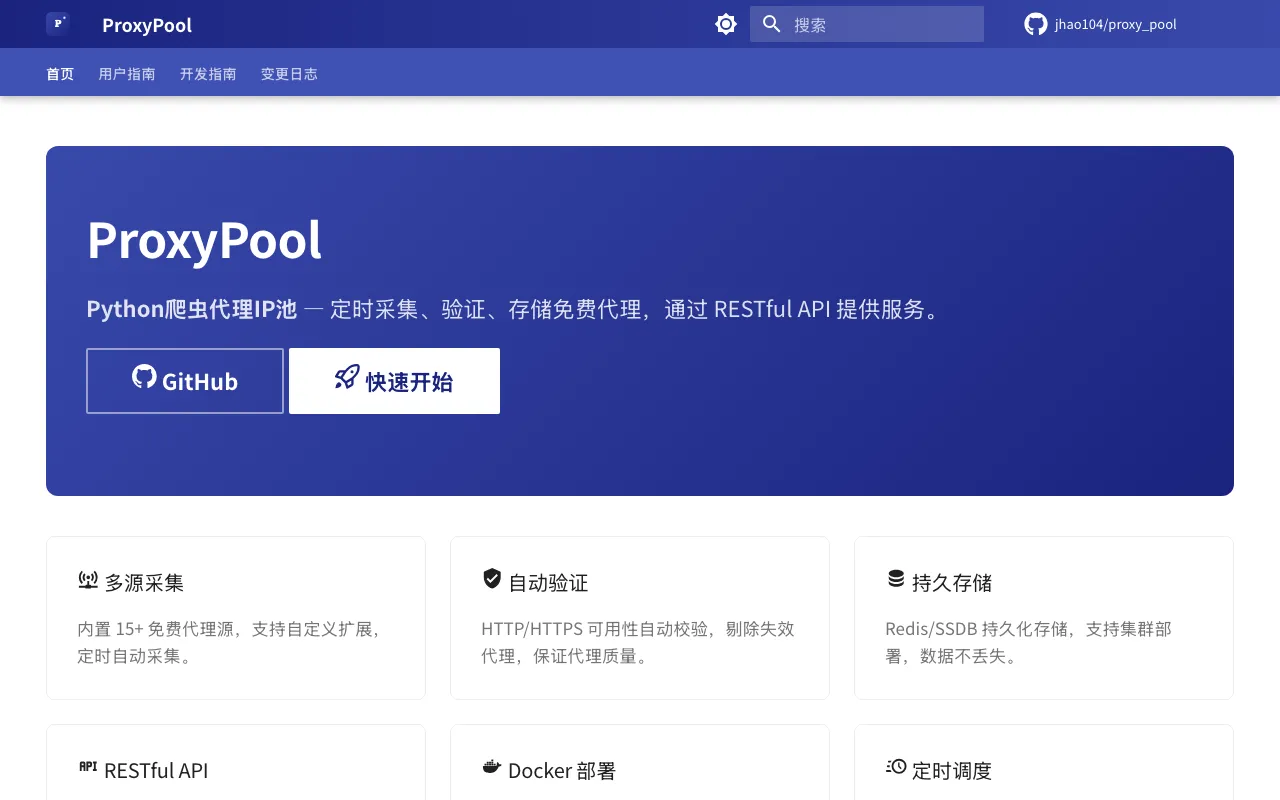
ProxyPool collects, checks, and stores free HTTP proxies for web crawlers. Clients fetch working endpoints through a RESTful API.
Overview
ProxyPool is a Python system that maintains a pool of free proxy IPs for web scraping. It gathers addresses from many sources on a schedule, validates HTTP and HTTPS reachability, and removes proxies that fail checks.
Validated proxies are stored in Redis or SSDB with support for clustered setups so data survives restarts. APScheduler drives recurring collection and maintenance so pool size stays managed without manual work.
A REST API exposes endpoints such as get, pop, all, count, and delete for consuming proxies from your crawlers. Documentation describes installation, configuration, custom fetchers, and custom validators.
Deployment options include running the scheduler and API processes directly with Python or using Docker and docker-compose, including a bundled Redis service.
Key features
- Multi-source free proxy harvesting
- HTTP and HTTPS validation
- Redis or SSDB persistence
- REST proxy retrieval API
- Scheduled pool maintenance
- Custom source extensions
- Custom validator rules
- Docker compose deployment
Use cases
- Web crawler proxy rotation
- Scraping with disposable IPs
- Testing through alternate egress
- Self-hosted proxy API service
- Automated free proxy curation