 Mixpanel

Umami
Privacy-first open-source web and product analytics platform
Umami tracks acquisition, behavior, conversion, retention, and revenue in one dashboard without cookies. You can self-host it or use Umami Cloud.

Open-source product analytics and context layer for apps
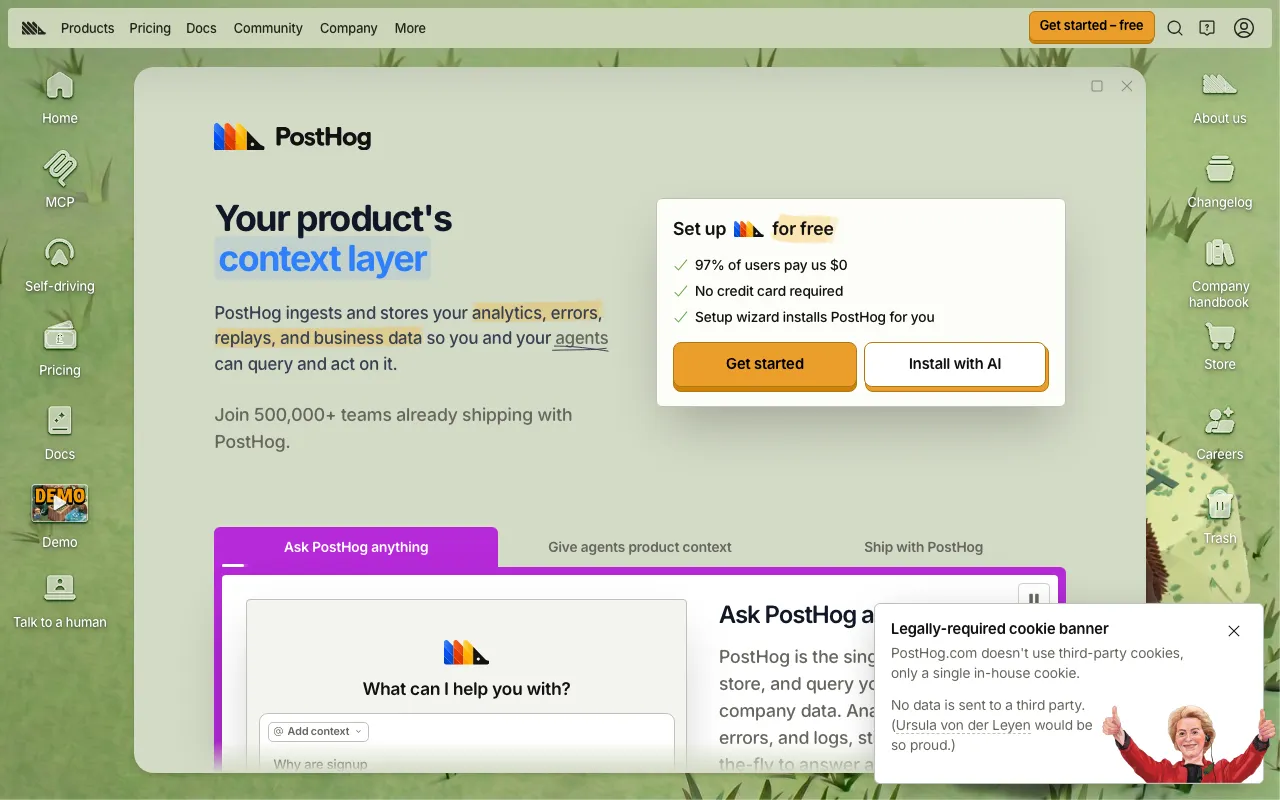
PostHog ingests analytics, session replays, errors, logs, and related product data so teams and agents can query and act on it. It ships feature flags, experiments, surveys, and warehouse tooling in one platform.
PostHog is built as a context layer for a product: it collects and stores analytics, errors, session replays, logs, and other signals alongside business data. Teams can analyze behavior with autocapture or manual events, SQL, web analytics dashboards, and group analytics for multi-seat accounts.
Session replay lets you watch website or mobile sessions, with heatmaps and an AI-assisted replay analysis feature. Observability pieces include error tracking, log search, and distributed tracing tied back to application code. Shipping features is supported through flags, statistical experiments, beta enrollment, surveys, in-app support chat, and workflows triggered by product data.
The data side includes a warehouse with many connectors, pipelines that filter and route events to external tools, and custom API endpoints backed by PostHog data. AI-related capabilities cover LLM observability, MCP usage analytics, an assistant for insights and SQL, and an inbox that turns product signals into reviewed reports and pull requests.
Most users start on PostHog Cloud, but a hobby open-source deploy on Linux with Docker is documented for self-hosting at smaller event volumes. SDKs and libraries exist for common web, mobile, and backend stacks, and an MCP server connects PostHog to editors and agents.
PostHog doesn't name these products itself, but its own description shows it does the same job.
Privacy-first open-source web and product analytics platform
Umami tracks acquisition, behavior, conversion, retention, and revenue in one dashboard without cookies. You can self-host it or use Umami Cloud.

Privacy-first lightweight open-source website analytics
Plausible Analytics collects aggregated, cookie-free website statistics with a simple dashboard. It is available as managed cloud hosting or a self-hosted Community Edition.

Usage-based SEO platform with AI agent MCP integration
OpenSEO covers keyword research, rank tracking, backlinks, site audits, competitor views, and AI visibility using DataForSEO data. It offers a hosted tier or self-hosted Docker and Cloudflare deployments with your own API key.

Privacy-oriented web and app analytics platform
Matomo collects, visualizes, and analyzes traffic from websites and apps with emphasis on data ownership and privacy controls. You install it on your server or use Matomo Cloud.
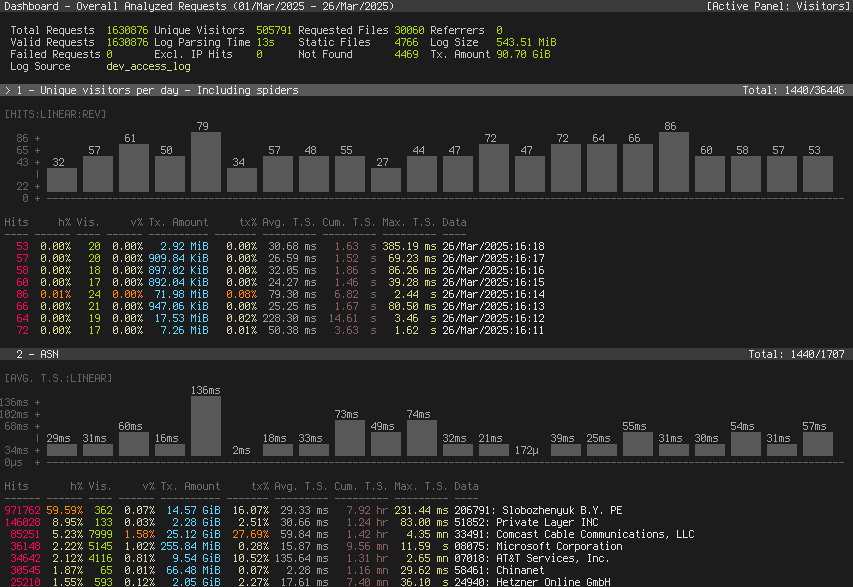
Real-time terminal and browser web log analyzer
GoAccess parses web server access logs and shows traffic statistics in the terminal or a live HTML dashboard. It targets admins and operators who want fast HTTP metrics without a heavy analytics stack.

Web session record and replay toolkit
rrweb captures DOM snapshots, mutations, and user interactions in the browser, then rebuilds them for session playback in your product.
 Google Analytics
 Fathom