
Astro
JavaScript web framework for content-driven sites
Astro builds content sites, web apps, and server APIs with server-first rendering, optional UI islands, and integrations for major frameworks.

JavaScript library for reusable web components
Polymer has had no code changes for over 18 months (last commit 2 years ago).
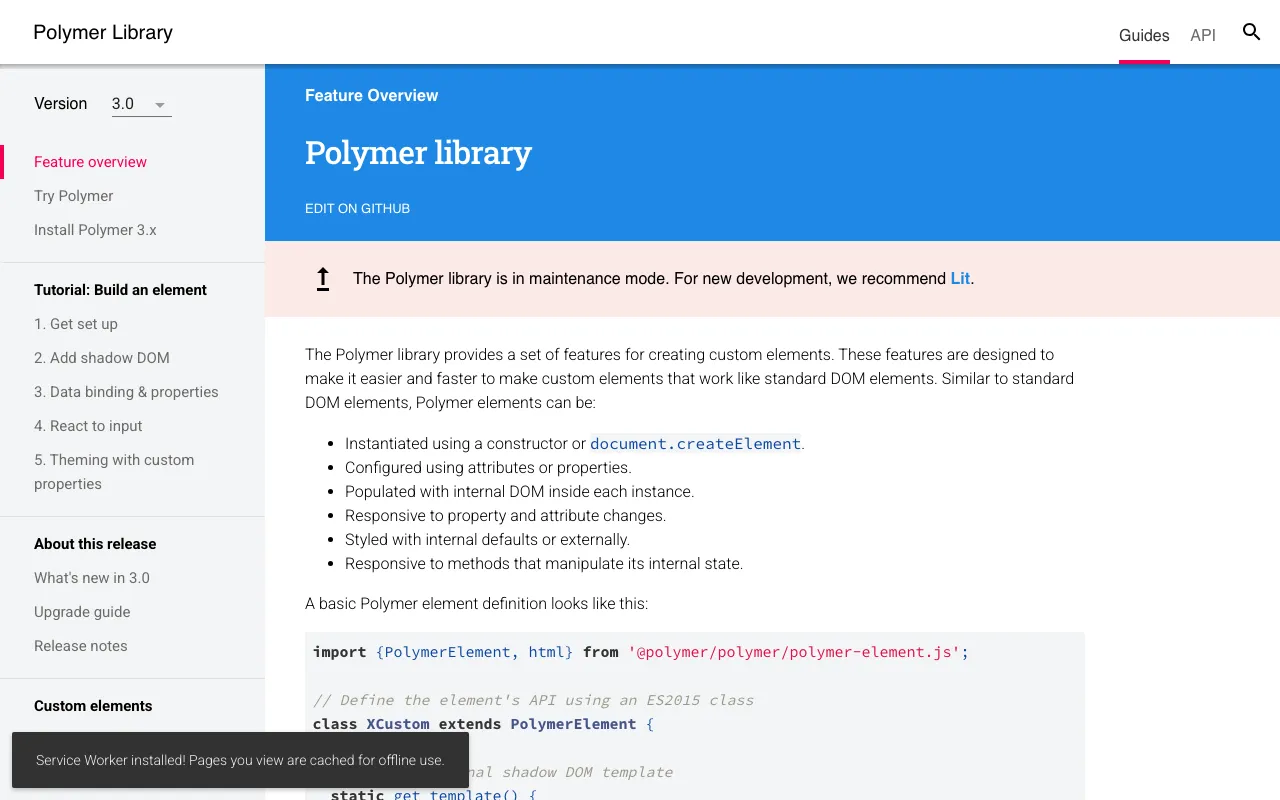
Polymer helps developers define custom HTML elements with encapsulated templates, styling, and properties. Elements behave like native DOM nodes in web applications.
Polymer is a lightweight JavaScript library built on the Web Components standards. You extend PolymerElement, declare properties and a template, register the tag with customElements.define, and then use the result in markup like any built-in element.
The model centers on self-contained, interoperable components that can be shared across projects and mixed with elements from other frameworks. Polymer adds declarative syntax for structure, CSS, and behavior, plus optional two-way data binding between model state and the element view.
The stable line ships as ES modules on npm and expects a small module specifier transform for in-browser development; the Polymer CLI development server and build pipeline perform that rewrite, and bundlers such as webpack or Rollup can also package elements. Native Web Components support is described in current Safari and Chrome builds, with polyfills for other browsers.
Google positions LitElement as the successor for new work, while Polymer 3.x remains for maintaining older codebases. Polymer 3 migration from earlier releases mainly means moving from HTML Imports to JS modules, with tooling available to automate much of the conversion.
JavaScript web framework for content-driven sites
Astro builds content sites, web apps, and server APIs with server-first rendering, optional UI islands, and integrations for major frameworks.

Full-stack Vue framework for web applications
Nuxt builds type-safe Vue apps with file routing, multiple render modes, server directory APIs, and a large module ecosystem.

React-based framework for fast content-driven sites
Gatsby is a React framework for building websites and apps, blending static generation with dynamic React capabilities. It pulls data from markdown, CMSs, and APIs through a unified GraphQL layer.

Flexbox-based modular CSS component framework
Bulma supplies ready-made responsive UI components as CSS only, without bundled JavaScript. You import or link its stylesheet and combine classes to build layouts.

Vue-based framework shipping one codebase to many platforms
uni-app lets developers write Vue.js front ends once and publish to mobile, web, mini-program, and quick-app targets from a single project.

Open-source low-code platform for internal business applications
ToolJet lets teams build admin panels, dashboards, and operational apps on existing databases and APIs. Create with a visual builder, prompts, or coding agents via MCP, then self-host or use cloud.
 Retool