
V2Ray Core
Core proxy platform for Project V networking tools
V2Ray implements Project V’s core networking protocols. It helps build proxies that secure connections and route traffic through configurable inbounds and outbounds.
Network-wide DNS sinkhole for ads and unwanted content
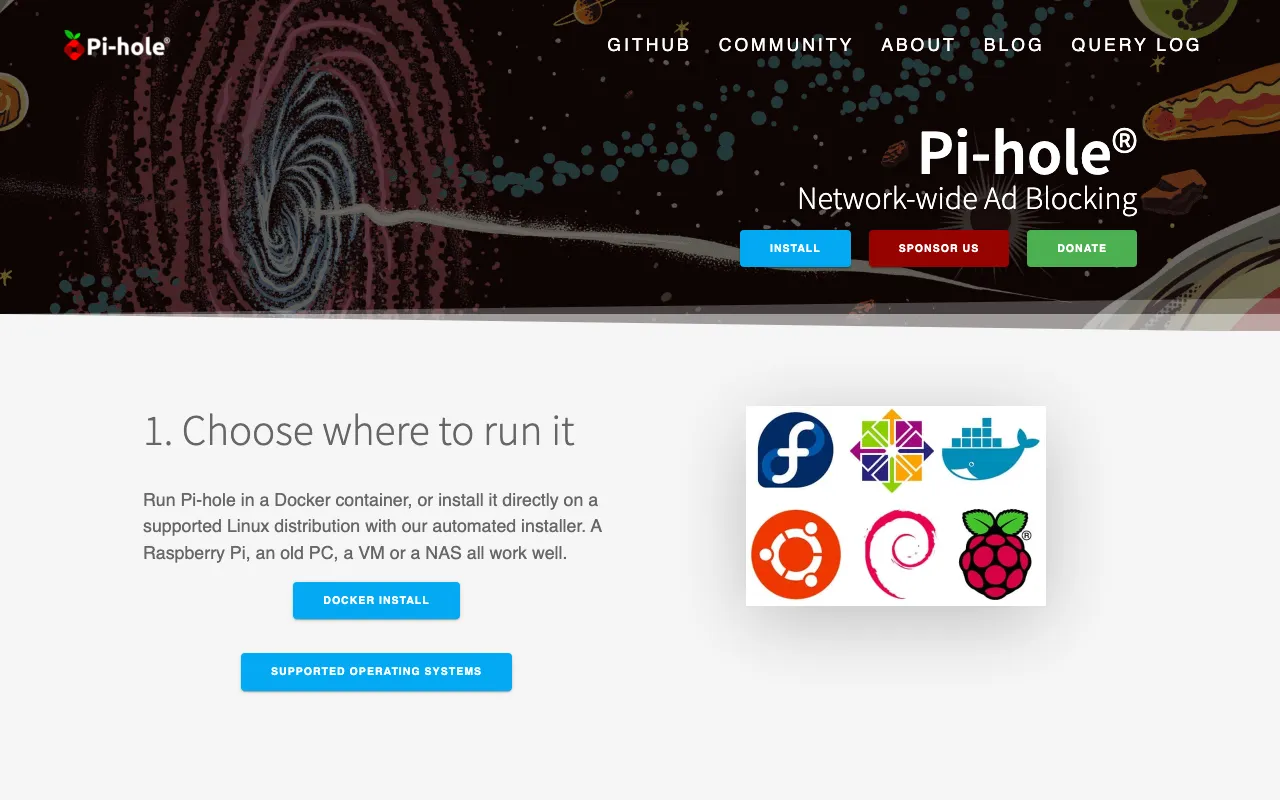
Pi-hole is a DNS sinkhole that blocks ads and unwanted content for every device on your network without client-side software on each device.
Pi-hole protects devices from unwanted content by acting as a DNS sinkhole on your own hardware. You install it once on Linux hardware, a VM, a NAS, or in Docker, then point your network’s DNS at it so phones, TVs, and apps are filtered at the network level rather than only in browsers.
Blocking happens before ads and trackers download, which can reduce bandwidth use and speed up repeat lookups through DNS caching. It works for in-app ads and smart TVs where browser extensions cannot reach. IPv4 and IPv6 are both supported.
You can manage Pi-hole through a responsive web dashboard or the pihole command-line tool. The dashboard shows query logs, block statistics, and settings; the CLI covers allowlists, denylists, regex rules, debugging, and updates. A REST API mirrors web capabilities for scripting and home automation, with built-in API documentation and app passwords.
Optional built-in DHCP can assign Pi-hole as the DNS server for all clients when your router cannot. Group management assigns different block lists per device group. Community blocklists and allowlists can be subscribed and kept updated. Privacy modes, local DNS records, configuration backup via Teleporter, and pairing with VPN tools such as WireGuard are documented for use off the home network.
Core proxy platform for Project V networking tools
V2Ray implements Project V’s core networking protocols. It helps build proxies that secure connections and route traffic through configurable inbounds and outbounds.
Self-hosted Tailscale-compatible control server
Headscale implements an open-source, self-hosted control plane compatible with Tailscale clients, built on WireGuard overlay networking.

Network platform built around Xray-core and REALITY
Project X centers on Xray-core, a configurable network core from the XTLS effort, alongside protocols such as REALITY and related tunneling and proxy features.

Configurable multi-protocol proxy platform for custom networks
Project V core implements V2Ray, a toolset for building proxy networks with many inbound and outbound protocols. It supports routing, load balancing, and obfuscation options.

WireGuard-based zero trust private networking platform
NetBird combines a peer-to-peer WireGuard overlay with centralized access control so teams connect machines and users without manual firewall and VPN gateway setup.

eBPF dataplane for Kubernetes networking and policy
Cilium delivers container networking, load balancing, identity-based policies, and observability for Kubernetes using an eBPF dataplane.