
Temps
Self-hosted deployment platform with observability stack
Temps is a single self-hosted binary for git-push deploys plus databases, analytics, errors, traces, uptime, email, and AI tooling on your server.

Self-hosted CLI agent for CI and incident investigation
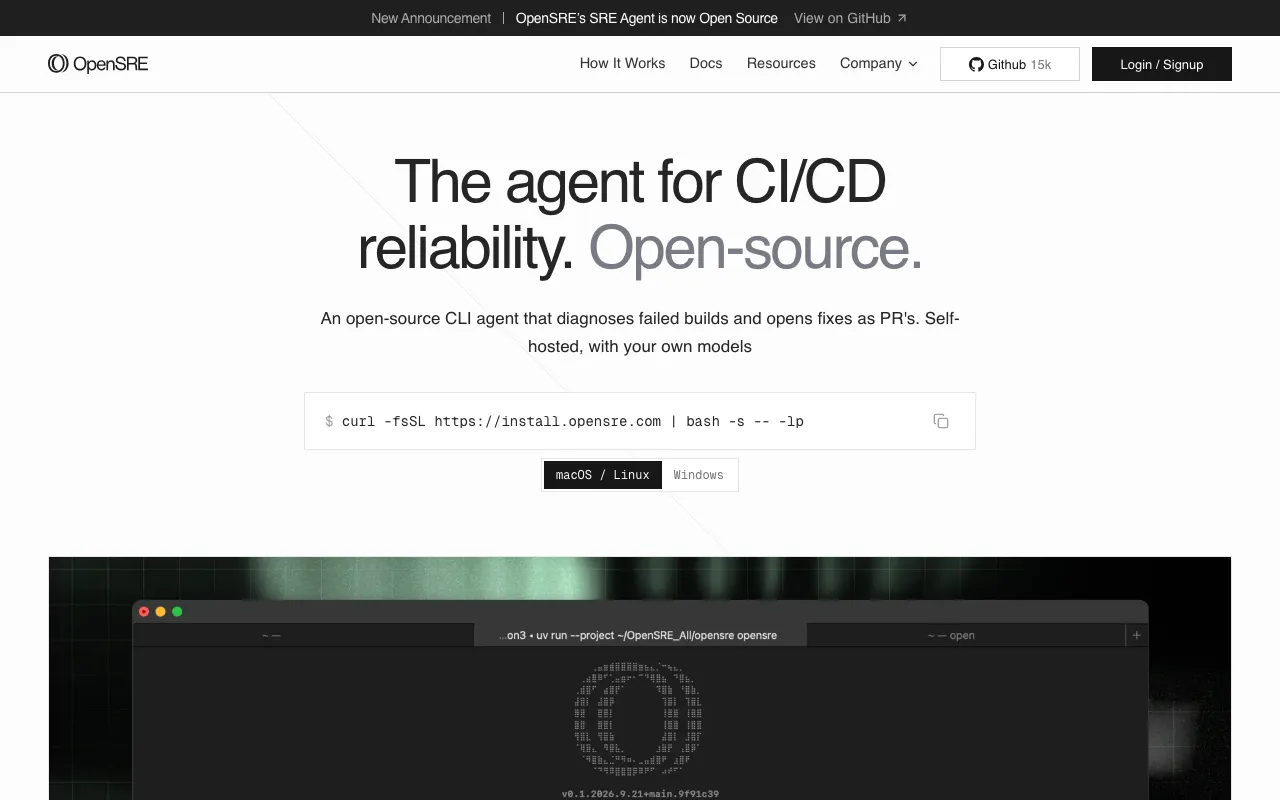
OpenSRE is a command-line agent that reads failed CI runs, traces causes, and can propose fixes using your own models and infrastructure. It also supports production incident analysis across connected observability tools.
OpenSRE targets teams whose pipelines fail without explaining root cause. When a run breaks, the agent gathers failing checks, logs, recent commits, and correlated telemetry, then reasons in a tool-calling loop to separate infrastructure issues from code defects.
You can run an interactive shell, issue one-shot headless prompts for scripts and CI jobs, or embed the Python API in internal services. Optional masking reduces sensitive identifiers before external LLM calls. Completed analyses can surface fixes on pull request branches for human review or post summaries to chat and paging systems.
Integrations span LLM providers, Git hosts, Kubernetes and cloud APIs, metrics and log platforms, databases, data orchestration tools, and incident channels such as Slack or PagerDuty. Deployment paths include a managed cloud gateway, EC2 gateway images, and self-hosted containers with configurable model providers.
The project labels itself public alpha: core flows work for early adopters but APIs may shift. Install scripts fetch binaries on macOS, Linux, and Windows without sudo by default, and documentation covers security expectations for production use.
Self-hosted deployment platform with observability stack
Temps is a single self-hosted binary for git-push deploys plus databases, analytics, errors, traces, uptime, email, and AI tooling on your server.
POSIX shell version manager for Node.js
nvm installs and switches between Node.js versions from the command line on POSIX shells including bash and zsh.

Self-hosted uptime monitoring with status pages and alerts
Uptime Kuma is a self-hosted monitoring tool for checking whether services stay online. It covers many probe types and can notify you through numerous messaging and email channels.

Fast Python package and project manager
uv is a Rust-based tool that manages Python dependencies, virtual environments, scripts, and interpreters. It offers a pip-compatible interface and universal lockfiles for projects.

Real-time global intelligence dashboard for news and geopolitics
World Monitor combines live news, market data, and geopolitical signals on interactive world maps. Available on the web, as desktop builds, a terminal UI, CLI, SDKs, and an MCP server.

Go-based static site generator with flexible templating
Hugo is a static site generator written in Go. It turns content and templates into deployable HTML sites with asset pipelines for CSS, JavaScript, Sass, and images.
 Vercel