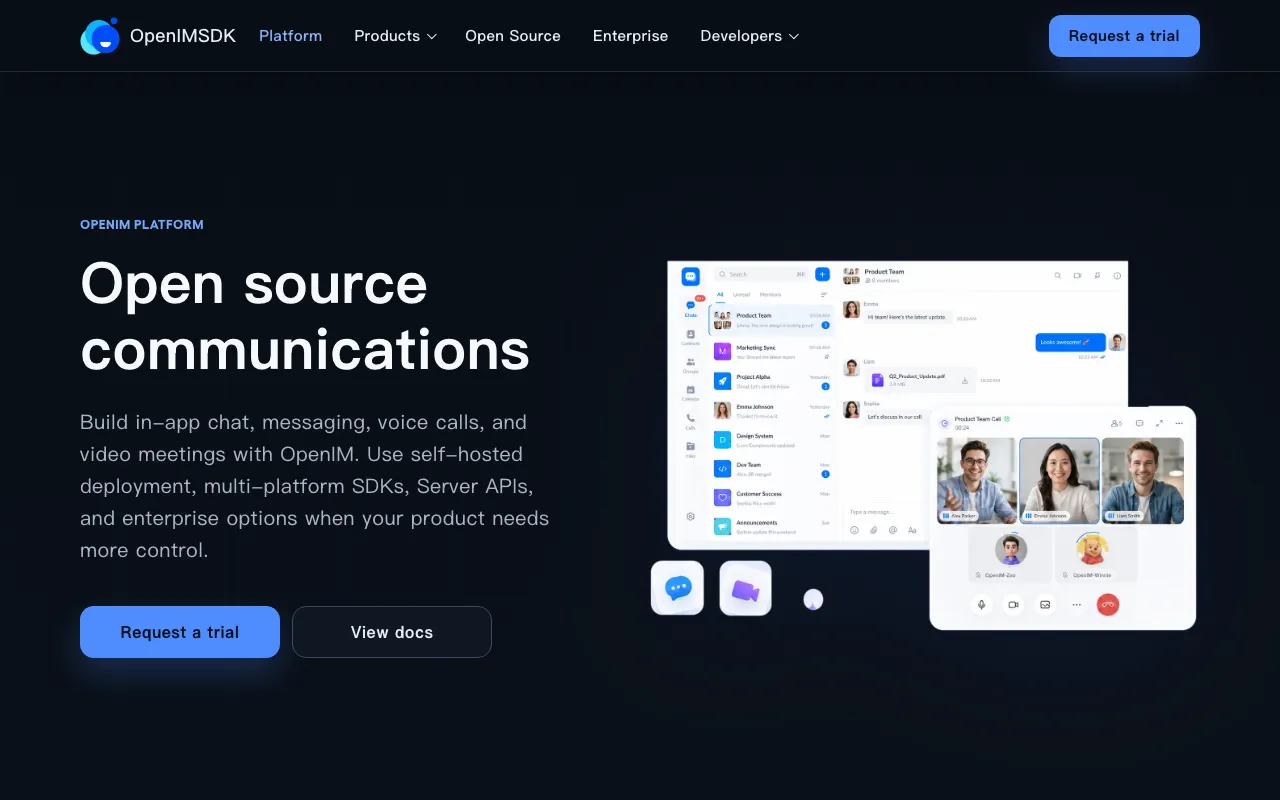
OpenIM Server is the backend for embedding chat, groups, and messaging in your apps—not a standalone consumer chat client.
Overview
OpenIM targets teams building real-time communication into their own products rather than offering a ready-made chat app like mainstream messengers. Together with OpenIM SDK on clients, it provides message send and receive, user accounts, friend graphs, groups, sessions, and local storage hooks for mobile, desktop, and web integrators.
OpenIM Server uses a microservice layout that can run in clustered mode with gateways and multiple RPC services. It is built in Go and supports large communities with very high message volume. Deployment guides cover source installs, Kubernetes, and Docker on Linux, Windows, and macOS across ARM and x86 hardware.
Business systems can call REST APIs to create groups, push messages, and automate workflows. Webhooks fire callbacks to your backend before or after selected events so you can enforce policy or enrich data. The platform’s public site separates chat and messaging features from voice and video products that share the same ecosystem.
Client SDKs connect to your hosted server instance, which you operate in your own environment and wire to existing authentication and storage. An online demo showcases end-user experiences, but production use centers on integrating the server APIs and SDKs into custom applications.
Key features
- Microservice IM backend
- REST APIs for business logic
- Event webhooks
- Large group and message scale
- Docker and Kubernetes deploy
- Cross-platform client SDKs
- Cluster gateway architecture
- Offline message support
Use cases
- In-app customer chat
- Team messaging inside SaaS
- Custom secure messenger backends
- Large community group chat
- Enterprise on-prem messaging

 Discord