
FreeDomain
Free domain registration with DNS learning resources
DigitalPlat FreeDomain lets people register free domains under several extensions, point custom nameservers at a DNS provider, and follow guides from setup through deployment.
C library implementing the IETF QUIC protocol
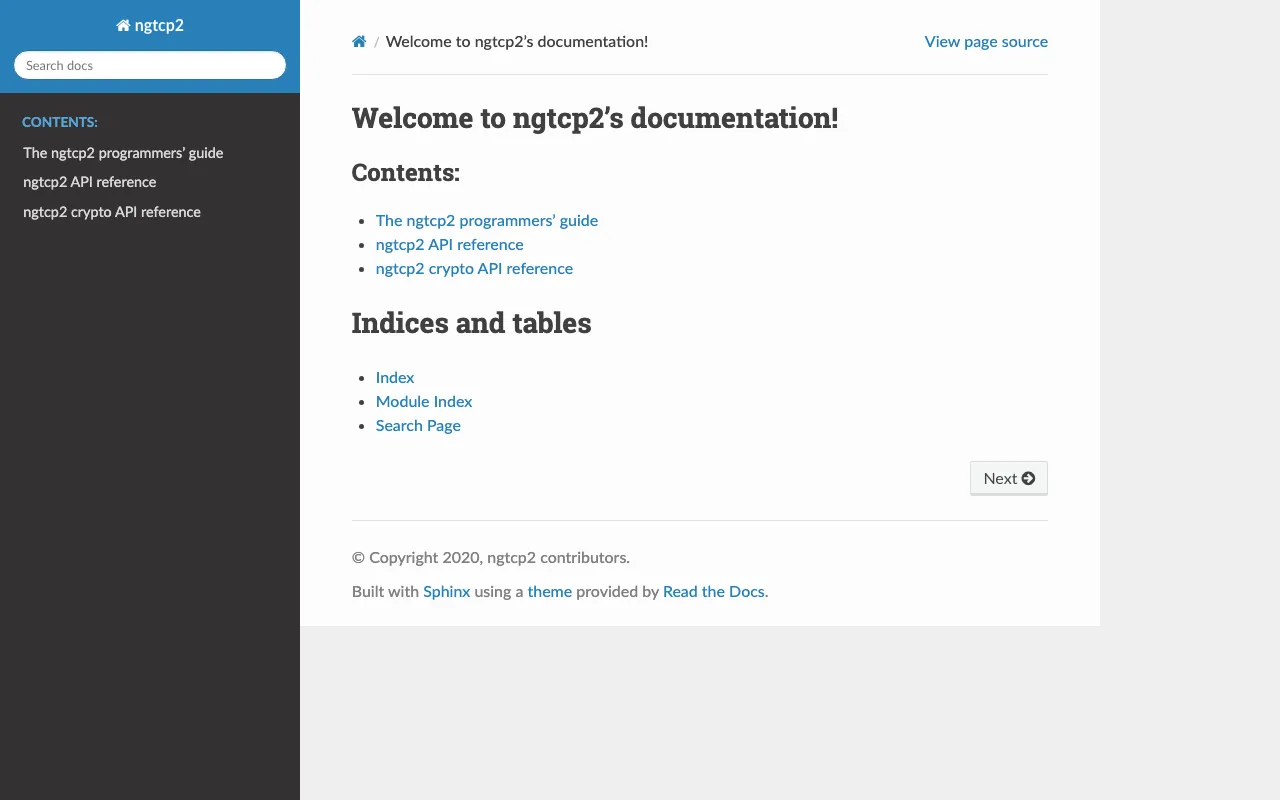
ngtcp2 is an open implementation of the QUIC protocol defined in RFC 9000. It ships as a C library with optional crypto helpers and example clients and servers.
ngtcp2 implements the IETF QUIC transport protocol. The core libngtcp2 library is written in C11 and has no mandatory external dependencies, while example programs use modern C++ and additional libraries for TLS and HTTP/3.
Public documentation and a test server endpoint are available for trying the stack. Example HTTP/3 endpoints can advertise HTTP/3 via Alt-Svc when accessed over HTTP/1.1 or HTTP/2. Implementations cover session resumption, 0-RTT data, address-validation tokens, and several QUIC protocol extensions.
A crypto helper layer abstracts TLS integration across multiple backends, including GnuTLS, BoringSSL or aws-lc, Picotls, wolfSSL, LibreSSL, and experimental OpenSSL builds. Matching sample clients and servers are built only when the corresponding backend is enabled.
Wireshark can be configured with SSL key logging to inspect QUIC traffic from the examples. Separate HQ-protocol clients and servers exist for interoperability testing with reduced functionality compared to full HTTP/3 peers.
Free domain registration with DNS learning resources
DigitalPlat FreeDomain lets people register free domains under several extensions, point custom nameservers at a DNS provider, and follow guides from setup through deployment.

Cross-platform Tauri desktop GUI for Clash Meta proxying
Clash Verge Rev is a desktop GUI for the Clash Meta proxy kernel on Windows, macOS, and Linux. It offers profile management, system proxy modes, and keeps configuration on your device.
Desktop GUI client for proxy cores
v2rayN is a graphical client for Windows, Linux, and macOS that works with Xray, sing-box, and related proxy stacks. Prebuilt packages ship for common CPU architectures.
Self-deployed reverse proxy for NAT and firewall bypass
frp pairs a public-facing frps server with frpc clients to expose TCP, UDP, HTTP, and HTTPS services behind NAT or firewalls, including P2P connect mode.

Extensible server platform with automatic TLS
Caddy is an extensible server platform that enables HTTPS by default. It is often used as an HTTPS and HTTP server with a modular Go-based architecture.

Dynamic HTTP reverse proxy and load balancer for microservices
Traefik routes HTTP traffic to microservices and balances load across backends. It watches orchestrators and registries to update routes without manual restarts.