
Socket.IO
Bidirectional real-time communication for web and Node
Socket.IO enables low-latency, event-based communication between clients and servers. It prefers WebSockets and falls back to HTTP long-polling when needed.

Open protocol and hub for HTTP real-time updates
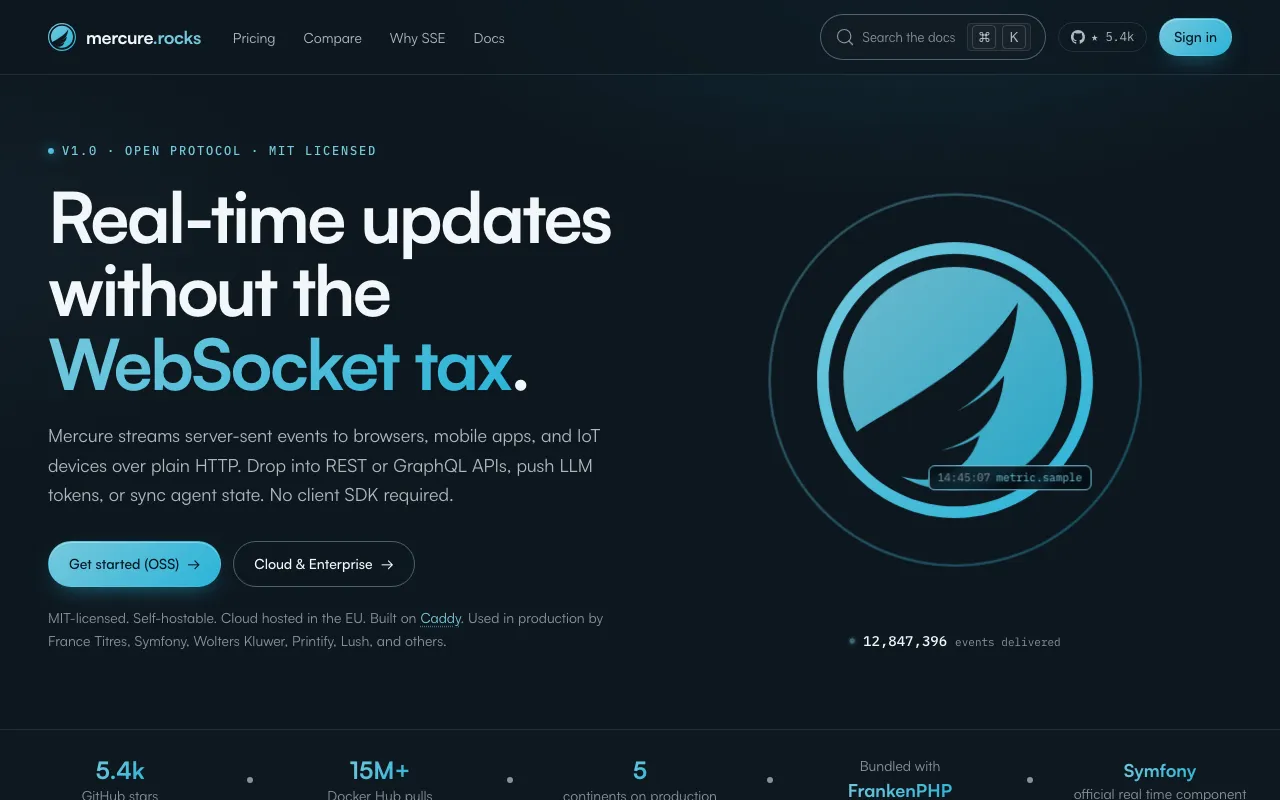
Mercure pushes data updates to browsers and other HTTP clients using server-sent events. It suits async API updates, notifications, and live UIs without mandatory WebSocket client SDKs.
Mercure defines a protocol for publishing updates to web browsers and HTTP clients in a way that stays efficient on batteries and networks. It fits reactive web and mobile apps that need real-time changes to resources exposed through REST or GraphQL APIs.
Publishing is an authenticated HTTP POST; subscribing uses standard EventSource in the browser. The same pattern works across platforms without locking clients to a proprietary SDK. Use cases described include live dashboards, in-app notifications, LLM token streaming, agent progress, async job status, and GraphQL subscriptions over HTTP.
A production-grade open hub implementation is written in Go and ships with an official Docker image. A Go library lets applications speak the protocol without a separate hub. Managed hosting is offered separately, but the open hub is MIT-licensed and intended for self-hosting without caps.
The hub builds on Caddy and is used with frameworks such as Symfony’s real-time component. Enterprise options add clustering, alternative message transports, and compliance-oriented controls, while the core OSS hub remains deployable on your own infrastructure.
Bidirectional real-time communication for web and Node
Socket.IO enables low-latency, event-based communication between clients and servers. It prefers WebSockets and falls back to HTTP long-polling when needed.

HTTP pub-sub push notification service
Ntfy sends push notifications to phones and desktops via simple HTTP PUT or POST requests and a REST API, without requiring sign-up on the public host.

Distributed task queue for Python workers and brokers
Celery distributes units of work called tasks from client applications to worker processes through a message broker. It supports RabbitMQ, Redis, Amazon SQS, and other transports with retries and scheduling features.

Realtime distributed message queue and pub-sub platform
NSQ is a distributed messaging system built for large-scale throughput. It avoids single points of failure and ships with official Go and Python client libraries.

Java client and real-time data platform for Valkey and Redis
Redisson is a Java client for Valkey and Redis with synchronous, asynchronous, reactive, and RxJava APIs. It adds distributed collections, locks, queues, caching helpers, and related services on top of standard Valkey or Redis deployments.
Node.js client for WhatsApp Web automation
whatsapp-web.js drives WhatsApp Web through Puppeteer so Node programs can send, receive, and manage chats with many web-client features. It targets multi-device accounts and documents session auth strategies.