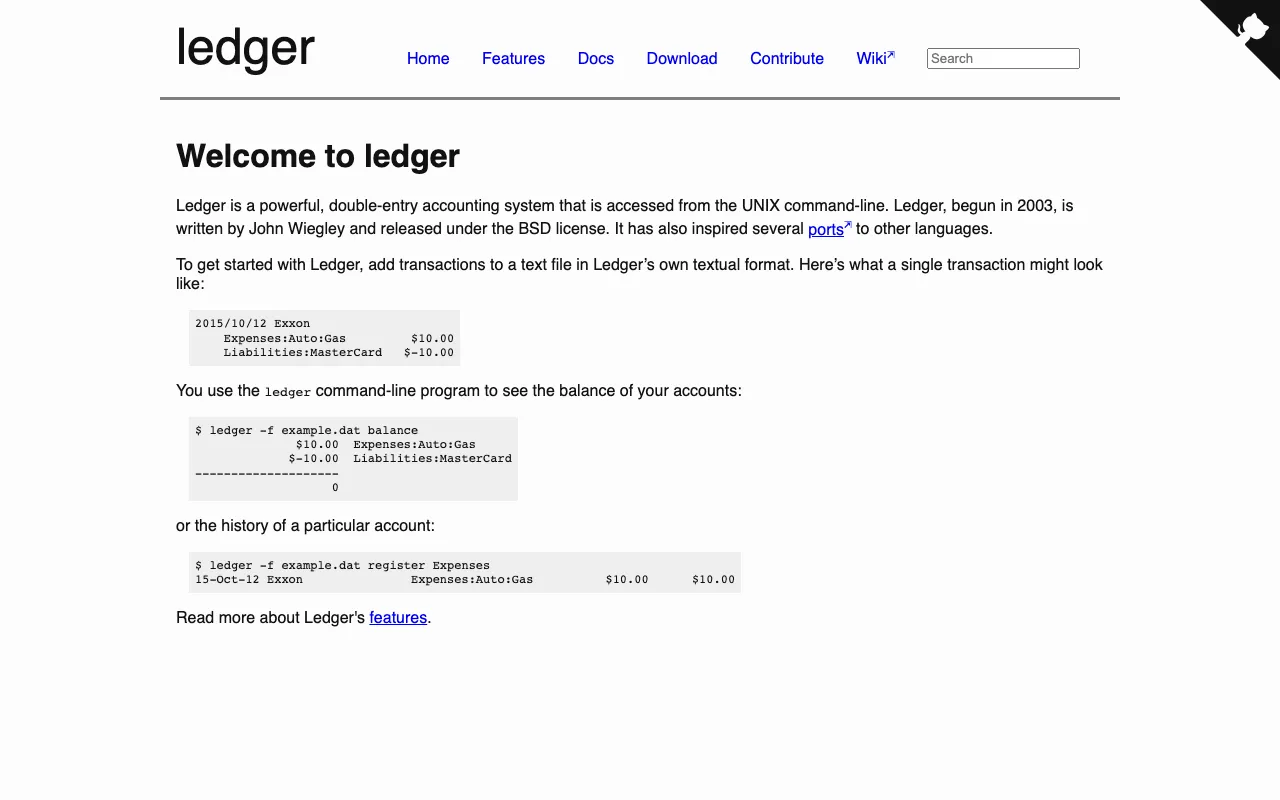
Ledger is a double-entry accounting system used from the shell. You maintain transactions in text files and generate balances and registers without a separate database.
Overview
Ledger is a double-entry accounting tool accessed from the UNIX command line. You record accounts and transactions in Ledger’s plain-text journal format, then run the ledger program with options to produce reports; there is no separate stored database beyond those files.
Typical output is plain text, though graphs or HTML reports are possible. You can inspect account balances, registers for specific accounts, and other reporting views derived entirely from the journal file you maintain.
Optional integrations include editor modes for Ledger files, optional Python bindings, and a published Docker image example that mounts a data directory to run register reports. Build documentation covers many operating environments and package managers for compiling the CLI yourself.
The design favors users who want direct, scriptable access to financial data and reporting from the terminal rather than a graphical accounting application.
Key features
- Double-entry plain-text journals
- Command-line balance and register reports
- No separate accounting database
- Optional Python bindings
- Editor modes for journal files
- Docker image for CLI runs
- Graph or HTML output options
- Import-related optional features
Use cases
- Personal finance tracking in git
- Scriptable accounting reports
- Plain-text audit-friendly books
- Terminal-based expense analysis