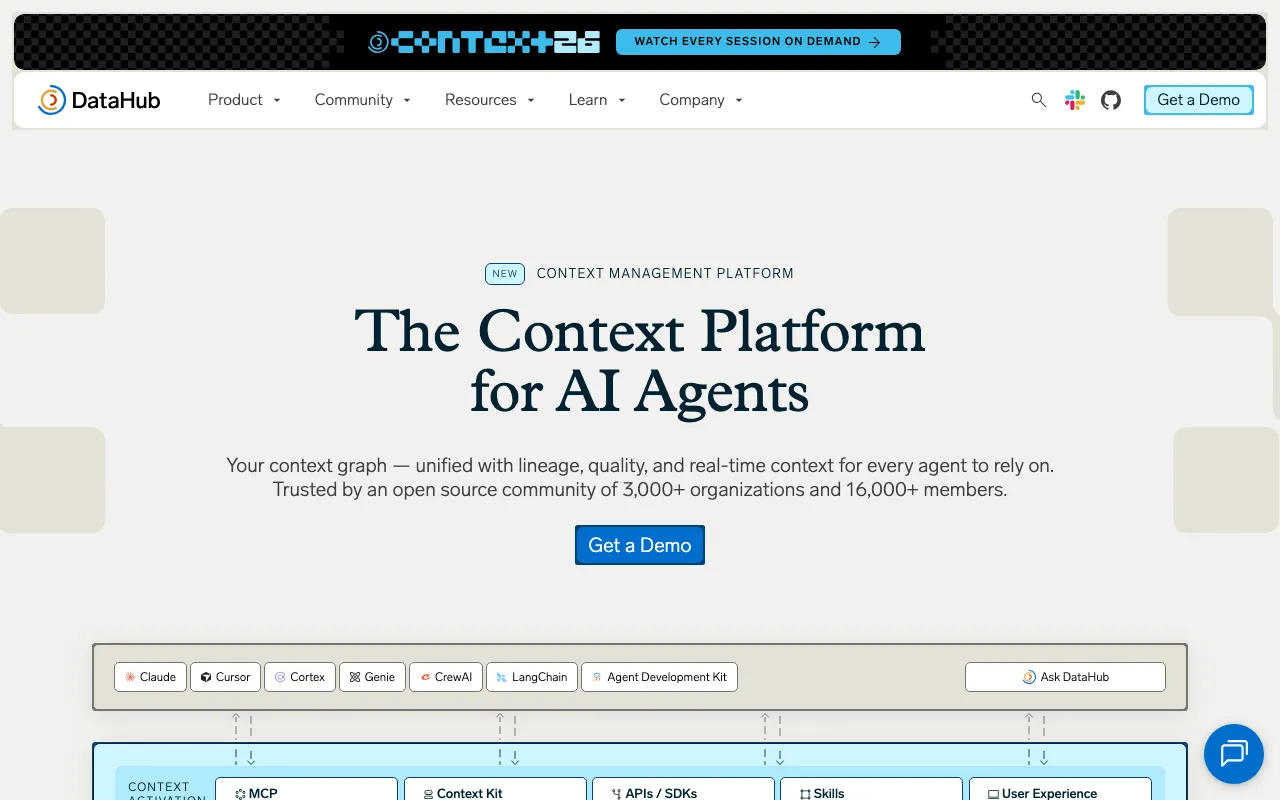
DataHub collects and serves metadata so teams can discover, govern, and observe data and AI assets. The open edition can run on your own infrastructure with broad connector coverage.
Overview
DataHub ingests metadata from many systems into a unified graph supporting search, lineage, documentation, ownership, and policy controls. Capabilities span discovery with column-level lineage and profiling, governance features such as glossaries and access policies, and observability through quality checks, freshness monitoring, and incident tracking.
A context-oriented layer enriches metadata for downstream consumers, including agent integrations via Model Context Protocol, GraphQL, REST APIs, and SDKs described in project materials. Query history and usage signals can feed semantic understanding without manual documentation alone.
The open-source edition targets teams that want full control of the stack, including deployment on Kubernetes or local quickstarts using Docker. A separate managed cloud offering adds SLA-backed hosting and additional enterprise features without changing the core metadata model.
The platform originated from large-scale metadata practice at LinkedIn and is used widely for cataloging tables, pipelines, dashboards, and related assets across heterogeneous data estates.
Key features
- Metadata ingestion integrations
- Column-level data lineage
- Search and discovery UI
- Business glossary support
- Ownership and policies
- Data quality monitoring
- GraphQL and REST APIs
- MCP agent connectivity
Use cases
- Enterprise data cataloging
- Data governance programs
- Impact analysis for changes
- AI agent context delivery
- Self-serve data discovery


 Sigma