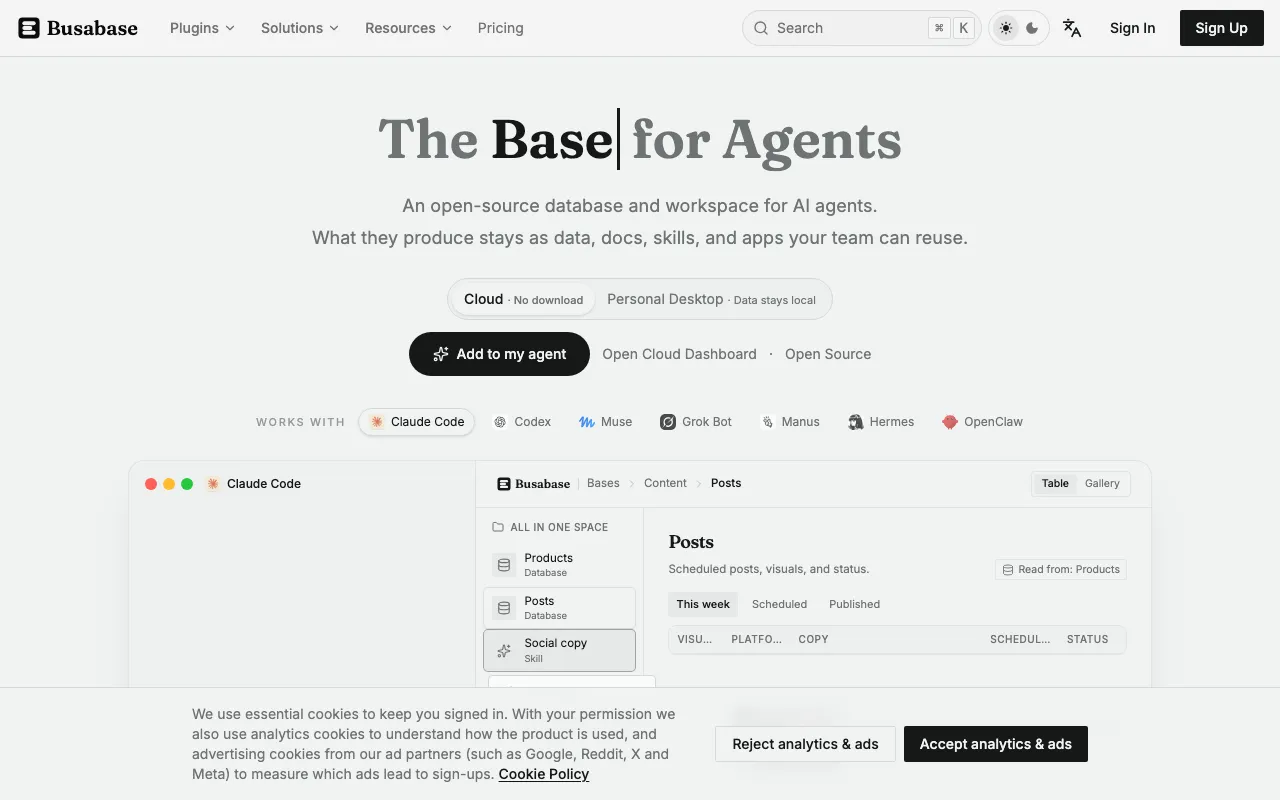
Busabase is an open-source, local-first database and workspace where AI agents and people share structured records, docs, skills and apps. Agent writes become change requests with diffs and history, optionally awaiting human review
Overview
Busabase is a system of record for AI agents. Instead of each agent session starting from zero, agents such as Claude Code, Codex, Cursor or custom ones connect to one shared workspace, read what earlier agents and teammates left behind, and write their own work back. The product has no built-in model; it works with whatever agent you connect.
The workspace holds several kinds of nodes in one tree: Bases (typed records with relations, views and forms), Docs, Files, Drives, Skills, AirApps, Whiteboards and Workflows. Skills are SKILL.md playbooks that agents can look up before acting. AirApps are small apps, such as dashboards or a CRM, that run inside Busabase on the workspace data. Templates install a full setup of Bases, views, docs, sample data and apps in one command.
Agent writes travel as Change Requests that carry a message, a field-level diff, an author and a history. Permissions decide whether a change merges immediately or waits for a person to review it. Agents connect through Agent Skills, MCP, OpenAPI, a CLI, or an ACP chat session in the Agents view, and there is a mobile app for reviewing change requests.
Busabase can run locally with embedded PGlite and file storage, with no account or configuration. Desktop apps exist for macOS, Windows and Linux, and a Docker image can be deployed on your own server. External Postgres and S3-compatible storage are supported. A hosted Busabase Cloud edition adds multi-user spaces, roles and permissions. The open-source server is intended for a trusted machine or private network, so write endpoints should not be exposed publicly without authentication.
Key features
- Bases with typed records, relations, views and forms
- Docs, files, whiteboards and workflows in one tree
- Shared SKILL.md playbooks for agents
- Change Requests with field-level diffs and history
- Optional human review of agent writes
- AirApps built on workspace data
- Agent access via Skills, MCP, OpenAPI and CLI
- Embedded PGlite or external Postgres storage
Use cases
- Shared memory across different AI agents
- Agent-maintained CRM and content pipelines
- Reviewing and approving agent-made changes
- Software delivery tracking with specs and conventions
- Labeling and scoring datasets
Does the same job as
Busabase doesn't name these products itself, but its own description shows it does the same job.

 Notion

 Airtable
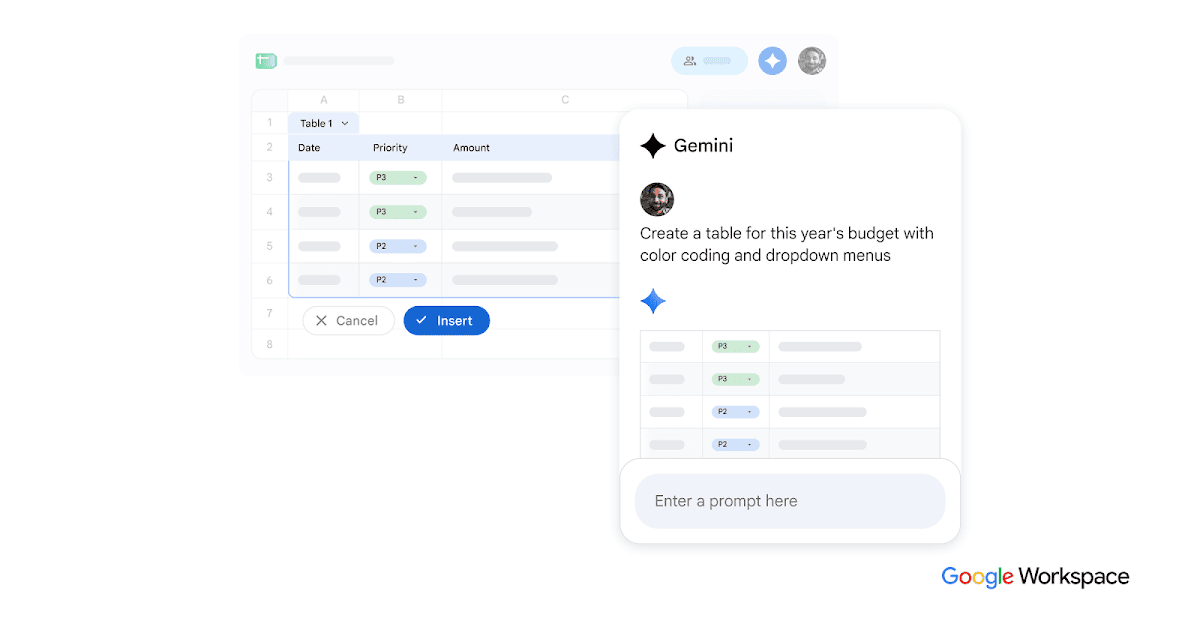 Google Sheets


 Anthropic Claude
 ChatGPT