Maigret
Username search across thousands of websites
Maigret checks a username against a large site database, collects public profile data, and supports CLI, library, Docker, and an optional built-in web interface for graph reports.

Web tool for navigating and annotating ATT&CK matrices
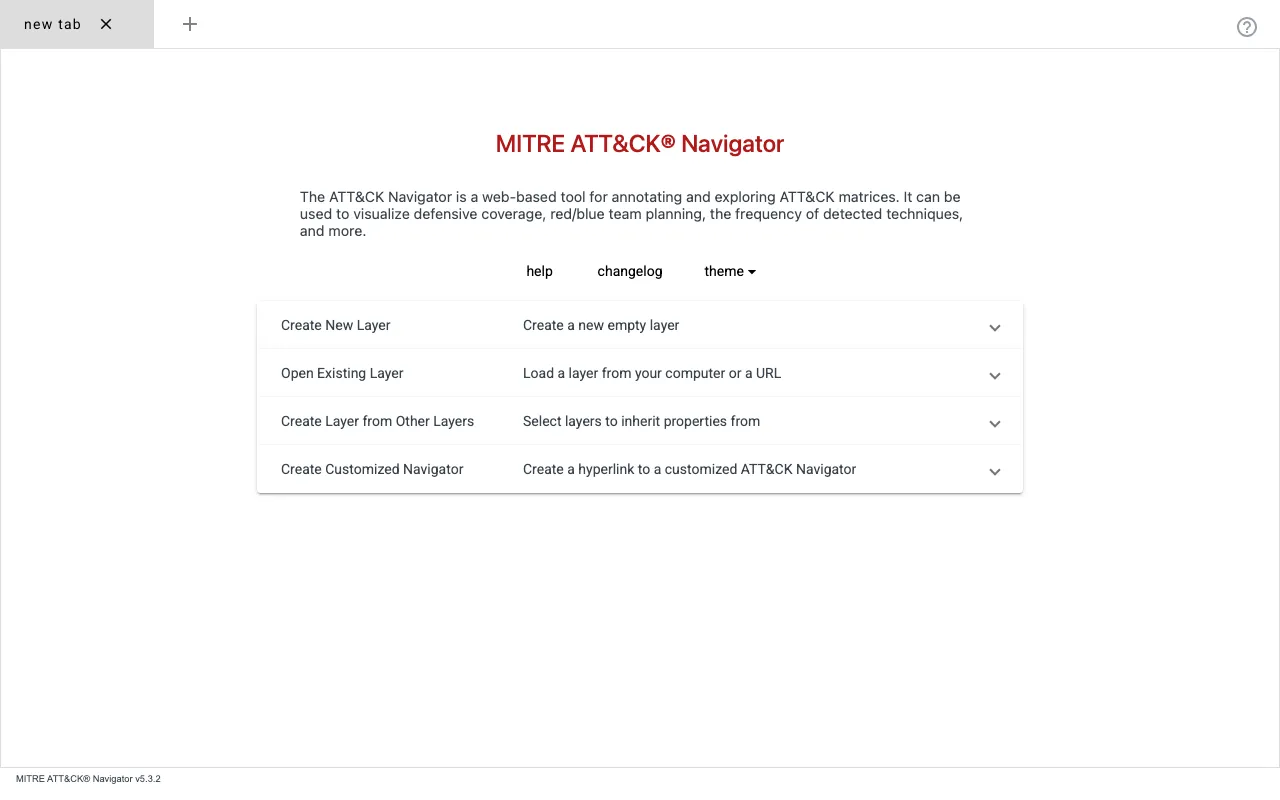
ATT&CK Navigator is a browser-based app to view, color, and annotate MITRE ATT&CK matrix cells via custom layers.
ATT&CK Navigator is a web application for basic navigation and annotation of MITRE ATT&CK matrices. It replaces spreadsheet-style matrix work with a generic matrix viewer where you color cells, add comments, assign numeric values, and similar markings.
Users define layers, which are custom views of the knowledge base, such as a platform-specific slice or techniques associated with a given adversary. Layers can be built interactively in the UI or generated programmatically and then opened in Navigator. Current releases support multiple ATT&CK domains in one instance and can load older ATT&CK versions down to v4.
A public instance is hosted on GitHub Pages; layer files uploaded there stay client-side and are not stored server-side. For sensitive layers, the documentation recommends running your own instance. You can install dependencies locally, run an Angular development server, or build and serve deployment artifacts with Docker.
Configuration can pull ATT&CK content from a collection index URL, TAXII 2.0 or 2.1 servers, or local STIX bundle files. Optional defaults load specific layers at startup, and features such as comments or other controls can be toggled off in configuration.
Username search across thousands of websites
Maigret checks a username against a large site database, collects public profile data, and supports CLI, library, Docker, and an optional built-in web interface for graph reports.

Self-hosted multi-agent autonomous penetration testing platform
PentAGI is a multi-agent system that plans and runs authorized penetration tests from plain-language goals. Specialized agents work in an isolated Docker sandbox with professional security tools and produce reports.

Automated OSINT scans with web or CLI control
SpiderFoot automates open-source intelligence gathering from hundreds of modules, correlating results through a rules engine. It ships with a built-in web interface and a command-line mode.

OSINT username search across social sites and forums
Social Analyzer offers a web app, CLI, and API to hunt usernames and profiles across more than a thousand sites. Modules score matches from unlikely to likely using layered detection techniques.

Mobile device compromise forensics toolkit
MVT gathers and analyzes forensic traces from Android and iOS devices to spot signs of spyware or targeting. It is a command-line toolkit for investigators, not casual self-checks.

eBPF TLS plaintext capture without custom CAs
eCapture uses eBPF to read SSL/TLS plaintext from OpenSSL, BoringSSL, GnuTLS, and Go TLS on Linux and Android without MITM proxies. It also audits shell commands and several database protocols.