 PortalOpen-source localhost tunnel with self-hostable trustless relays
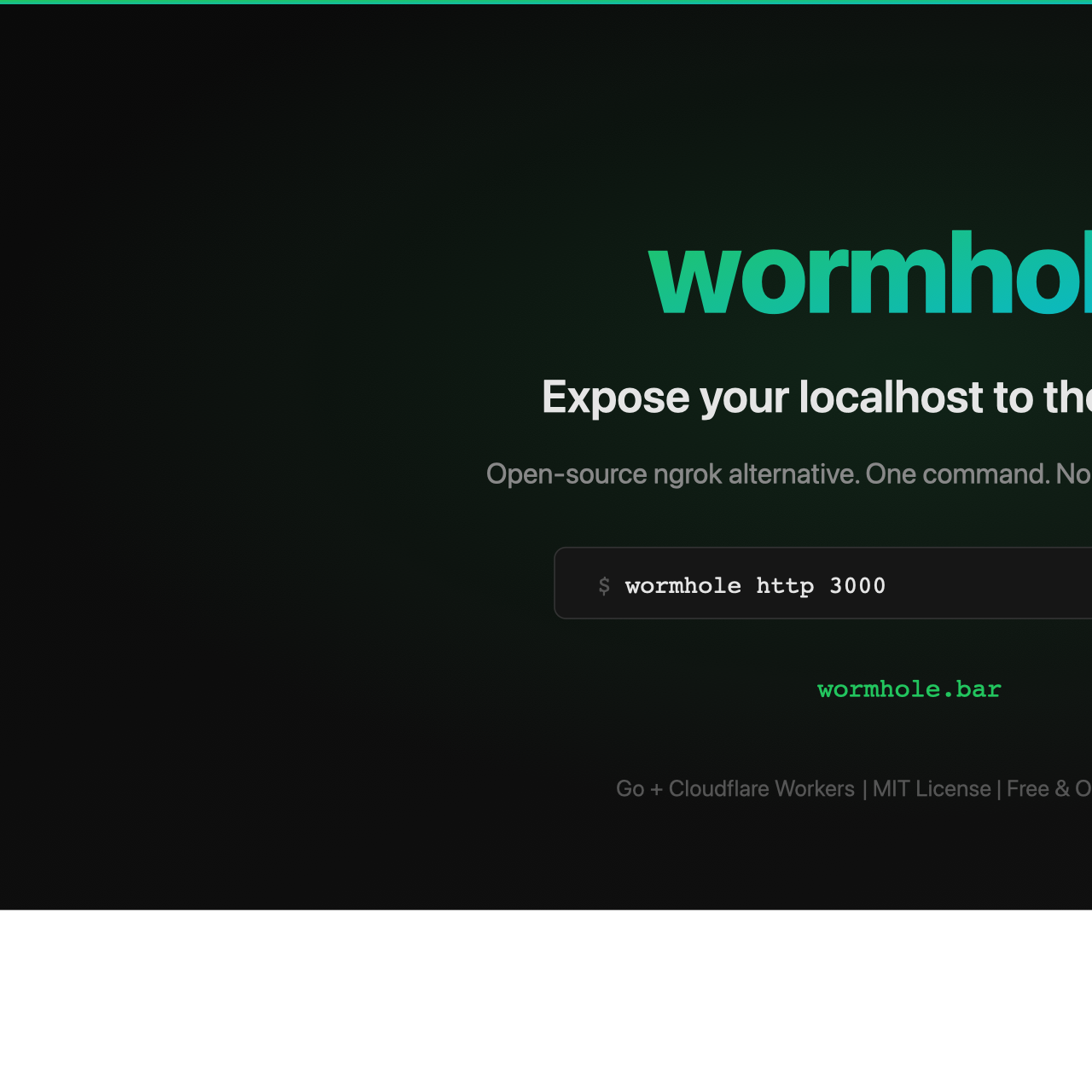 WormholeCLI tool for instant HTTPS tunnels via Cloudflare Workers
Portal vs Wormhole
How Portal and Wormhole compare on popularity, activity, license and platforms: two open-source Networking & Connectivity projects, both alternatives to ngrok.
At a glance
- Wormhole has more GitHub stars (440 vs 305).
- Portal was updated more recently (last commit 2 days ago, Wormhole 2 months ago).
- Both use the MIT license.
Side by side
| Portal | Wormhole | |
|---|---|---|
| GitHub stars | ★ 305 | ★ 440 |
| Forks | 32 | 32 |
| Last commit | 2 days ago | 2 months ago |
| Latest version | v2.8.0 | v0.3.0 |
| Repository started | October 2025 | March 2026 |
| License | MIT · permissive | MIT · permissive |
| Self-hosted | Desktop/CLI app | Desktop/CLI app |
| Platforms | Linux, macOS, Windows, Docker, CLI | Linux, macOS, CLI |
| Main language | Go | Go |
| Alternative to | ngrok | ngrok |
Highlighted: more stars or forks, or a last commit at least two weeks more recent. Data from GitHub, updated 27 November 2026.
Portal
Portal publishes local apps and APIs through public or self-hosted relays without accounts, using local cryptographic identity, optional client-side TLS, multi-relay failover, and IVNP overlay routing.
Key features
- Public or self-hosted relays
- Client-side tenant TLS
- No accounts or API keys
- Multi-relay failover pools
- MITM self-probe on relays
- IVNP overlay routing option
Wormhole
Wormhole exposes a local HTTP server to the public internet with one command, optional GitHub login for custom subdomains, and a local traffic inspector.
Key features
- One-command public HTTPS tunnels
- Custom subdomains after GitHub sign-in
- Local traffic inspector with replay
- WebSocket forwarding through the tunnel
- HAR export of captured requests
- Automatic reconnect with backoff